
For decades, global trade operated on a single golden rule: Just-in-Time. Importers and exporters built ultra-lean supply chains assuming ocean schedules were predictable, port congestion was rare, and freight rates moved in gentle cycles.
Today, that playbook is history. Between shifting maritime alliances, Red Sea and canal rerouting, strict new carbon mandates, and rapid manufacturing diversification, global logistics has entered the era of “Just-in-Case” resilience. For businesses moving cargo across borders, success no longer depends solely on booking the lowest spot rate—it depends on agility.
Here are the three biggest shifts transforming international freight forwarding right now, and what they mean for your shipments.
1. Predictive AI Is Replacing Reactive Tracking
Knowing where your container is sitting is no longer enough; shippers need to know what will happen to it three days from now. The latest wave of supply chain technology has moved from passive GPS tracking to predictive disruption intelligence.
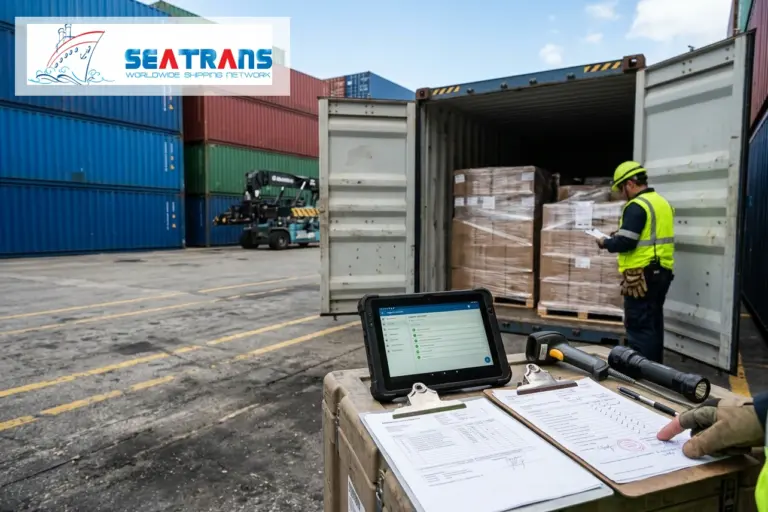
By analyzing vessel AIS data, port berth backlogs, weather patterns, and customs clearance velocity in real time, modern freight forwarders can spot bottlenecks before a vessel even drops anchor. When a transshipment hub begins to clog, cargo can be proactively diverted to alternative ports or switched to Sea-Air multimodal routes—saving weeks of costly demurrage and stockouts.
- Real-time berth & schedule analytics: Anticipate transshipment rollovers before they happen.
- Proactive Sea-Air switching: Protect time-sensitive inventory when ocean transit times stretch.
- Demurrage & detention prevention: Pre-clear documentation prior to vessel arrival.
2. The Rise of the ‘China+1’ & India–Middle East Corridor
Global sourcing is undergoing its biggest geographic realignment in thirty years. As manufacturers adopt China+1 strategies, production and export volumes are surging across India, Southeast Asia, and the Middle East.
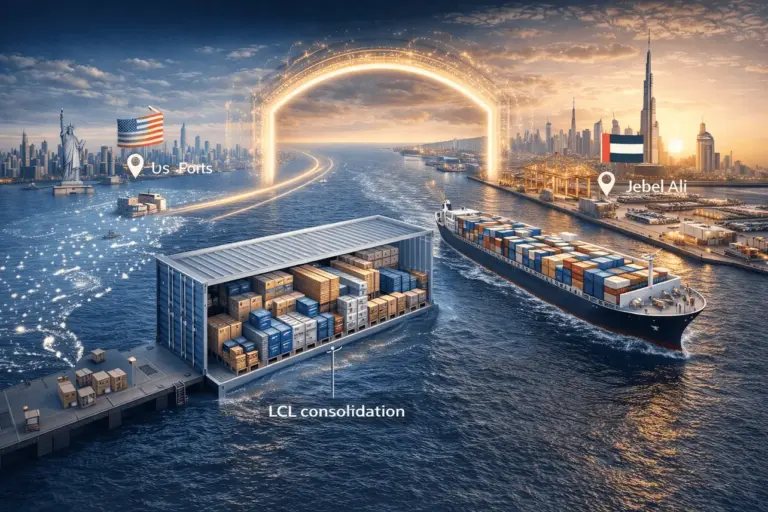
High-growth hubs like Nhava Sheva, Mundra, Chennai, Jebel Ali, and Jakarta are seeing record container throughput and expanding air cargo belly capacity. Navigating these dynamic trade lanes requires more than a carrier booking portal—it demands on-the-ground local expertise, pre-verified customs documentation, and reliable partner networks at both origin and destination to prevent regulatory delays.
3. Green Freight Is Now a Commercial Reality
Sustainability has officially moved from corporate brochures onto the commercial invoice. With tightening maritime emissions regulations—such as EU ETS and FuelEU Maritime—and the rollout of green shipping corridors, shippers are increasingly evaluated on their Scope 3 carbon footprints.
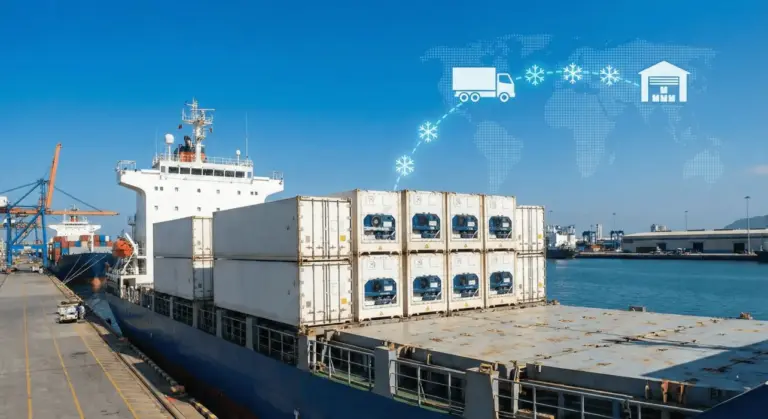
Smart logistics planning now balances transit speed and cost with carbon efficiency: optimizing FCL/LCL consolidation, selecting eco-retrofitted vessels, and utilizing intermodal rail and road networks to cut emissions without sacrificing delivery timelines.
Turning Supply Chain Volatility into Your Competitive Edge
In an unpredictable market, your freight forwarder shouldn’t just be a space broker—they should be your strategic risk manager.
At Seatrans Agencies Pvt. Ltd., we combine deep local customs and operational expertise with a trusted global network of WCA partner offices across key trade hubs in Asia, the Middle East, Europe, and the Americas. Whether you are moving time-critical air freight, full-container (FCL) or consolidated (LCL) ocean cargo, or complex project shipments, our team builds flexible, end-to-end routing solutions that keep your supply chain moving when others stall.
Ready to future-proof your next shipment? Contact Seatrans Agencies today for a customized route consultation and competitive freight quote.