


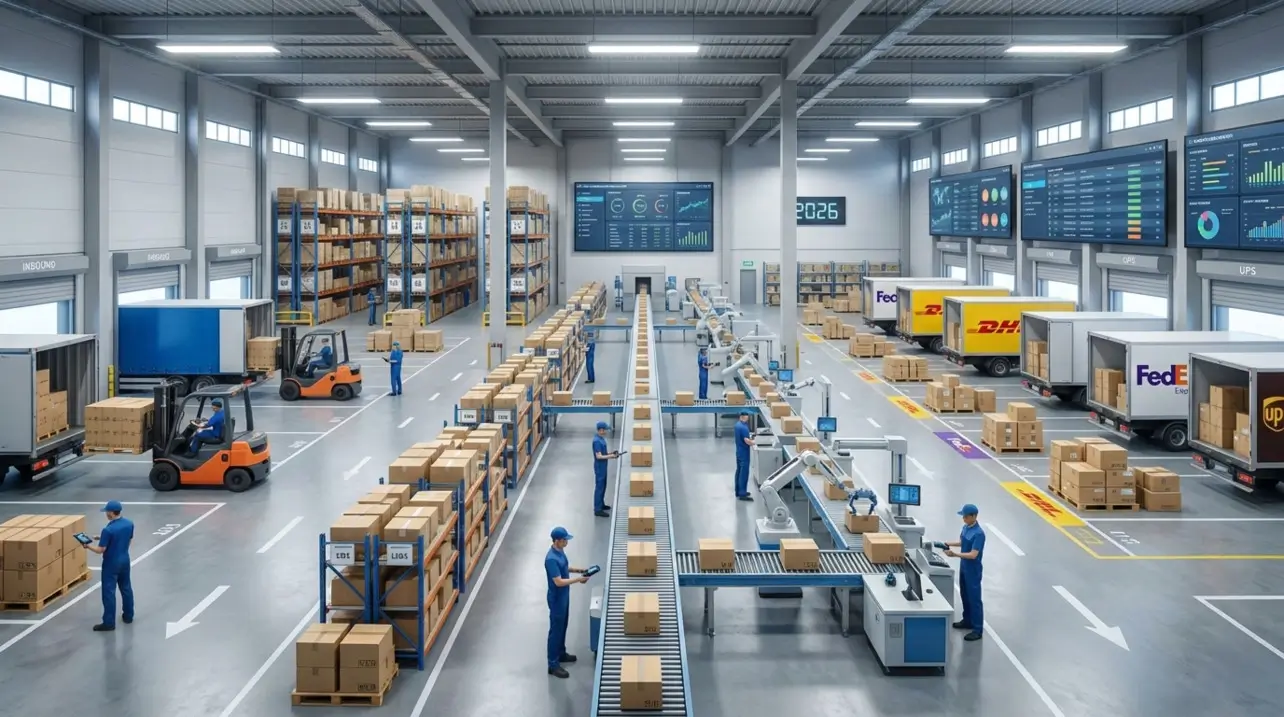
Efficient shipping depends on what happens inside the warehouse before a carrier collects the shipment. Small issues such as poor item locations, long walking routes, slow picking, and late staging can add hours to every order.
A practical improvement plan can cut these delays without interrupting daily operations. This article shares simple ways to improve receiving, storage, picking, packing, and dispatch in 2026. The aim is to shorten shipping lead times and deliver a better customer experience.
What Is Warehouse Logistics and Why It Matters
Understanding the Basics
Many managers ask, what is warehouse logistics in simple terms. Warehouse logistics includes the tasks that move goods through a warehouse from receiving to shipping. These tasks include unloading, checking, put-away, storage, replenishment, picking, packing, labeling, staging, and dispatch.
A logistics warehouse is the facility where these steps follow a set flow with clear locations and clear rules. The main goal is to store items safely and move them to the dock quickly when an order comes in.
The Impact on Your Business
Shipping lead time goes up when internal steps take too long or when teams repeat work. Errors also create delays because staff must search for items, repick orders, or fix paperwork.
Strong logistics warehouse management reduces these delays because it standardizes processes and increases inventory accuracy. Quicker shipping builds customer confidence and can lower expenses associated with complaints, returns and reshipments.
Key Steps to Optimize Your Warehouse Logistics System
Step 1: Organize Your Inventory Efficiently
Start with slotting, which means placing items based on demand and handling needs. Put fast-moving items near packing areas and shipping lanes so pickers walk less. Store heavy or bulky items where lifting is safer and where staff avoid extra handling. Use clear location labels and simple bin names so staff can find items quickly.
Use FIFO (First In, First Out) when product age matters, such as for food, chemicals, or items with expiry dates. FIFO reduces waste and helps prevent sending the wrong batch to customers. If FIFO is hard to follow, add large date labels and use a simple replenishment rule. These steps reduce search time and keep picking steady during busy hours.
Step 2: Implement Warehouse Management Software
Warehouse management system (WMS) helps staff to find the correct task and to the correct location to work faster. The WMS provides functionalities for barcode scanning, actual stock levels and planned picking routes. A warehouse management system also cuts down on manual entry, minimizing errors in picking and shipping.
Select software according to your warehouse procedure like batch picking, zone picking, wave picking or kitting. By integrating the WMS and your order system, orders will enter the queue immediately. Integrate the WMS with carrier systems for quicker label printing and prompt tracking number delivery to customers. As a result of these changes, the internal waiting time is reduced. As a result, shipments are leaving earlier each day.
Step 3: Reduce Your Warehouse Footprint Strategically
A small space can be easier to maneuver, however, a poor layout can still congest traffic and cause delays. It is not about having the smallest space; it is about the best flow inside. Numerous companies refer to this area decision warehouse footprint planning as it develops travel times, staging space, and picking speed.
Map the routes for receiving, picking, packing, shipping so you can identify where people intersect and bottleneck one another. Rearrange storage areas and aisle paths to establish a one-directional stream of work with no backtracking. Remove space that does not support movement or storage, such as aisles that are wider than needed.
Move packing stations closer to the pick area for top-selling items. If the same footprint warehouse handles pallets and small-item picking, separate these areas to reduce traffic conflicts. A cleaner layout reduces walking time, reduces crowding, and improves safety.
Step 4: Use Data to Track Performance
Measure time and accuracy at each step so the team can see where lead time grows. Track order cycle time, pick rate, pack rate, dock-to-carrier time, and exception rate. Use simple dashboards that show daily targets and daily results. Run cycle counting to keep system stock aligned with physical stock.
Strong inventory accuracy prevents “ghost stock,” which can cause last-minute picking delays. Review the top delay reasons each week and fix one root cause at a time. This method improves speed in a stable way and keeps staff aligned.
Advanced Warehouse Logistics Strategies for 2026
Automation and Technology Integration
Automation reduces lead time when it removes repeat manual work. Conveyors, sorters, and pick-to-light systems can move items faster and reduce picking errors. Mobile carts with scanners and label printers can also reduce walking and reduce trips back to fixed stations.
Start automation in areas with high volume and stable order patterns. Confirm that receiving and put-away are stable before adding automated equipment. Use clear SOPs so people and machines work safely in the same space.
Smart Warehouse Layout Design
A good layout supports a clean flow from inbound to outbound. Place receiving near inbound docks and keep a staging area so pallets do not block aisles. Match put-away locations to item size, demand, and handling method.
Create a pick path that limits crossing and reduces dead ends. Set up packing lanes with cartons, tape, void fill, and scales within easy reach. Keep staging lanes by carrier or route so loading stays fast and sorting mistakes drop.
Staff Training and Process Improvement
Training turns a plan into daily results. Teach standard steps for scanning, picking, and packing so work stays consistent across shifts. Run short refresh sessions that focus on one issue, such as mispicks or slow replenishment.
Give team leads the authority to fix repeat issues, such as blocked locations or missing labels. Ask staff for improvement ideas because they notice small delays that supervisors may miss. Test ideas in a small area first and scale only the changes that work.
Common Mistakes to Avoid in Warehouse Logistics
Ignoring Inventory Accuracy
Inventory errors slow shipping because pickers waste time searching for items or replacing missing items. Inventory errors also cause partial shipments, which can increase freight cost and customer complaints. Cycle counts, scan rules, and clear labels help prevent these problems.
Delaying Technology Updates
Old systems create extra manual work such as rekeying data and printing paper pick lists. This extra work increases lead time and increases error risk. Planned updates protect service levels and reduce last-minute fixes.
Overloading Your Facility
High space usage can block aisles, mix pallets, and slow put-away. A full warehouse also reduces flexibility during seasonal peaks. Keep space for staging, returns, and urgent orders so the warehouse stays steady under pressure.
Planning Your Warehouse Logistics Improvements for 2026
Create a Clear Action Plan
Map the full order journey from inbound to outbound. Identify the longest waits, such as slow put-away, slow replenishment, or late carrier pickup. Choose the first changes based on the biggest delay you can remove.
Write simple SOPs for receiving, picking, packing, and exception handling. Assign one owner to each change and set a clear review date. Keep targets realistic so teams improve speed without reducing accuracy.
Budget for Success
Build a budget that covers tools, training, and layout changes. Include costs for scanners, label printers, racking changes, and software licenses if needed. Plan time for testing because rushed rollouts often create new delays.
Monitor and Adjust
Compare results before and after each change so you know what improved. If a change improves speed but reduces accuracy, adjust the workflow before you scale it. Hold a monthly review so performance stays stable as order volume grows.
Conclusion
Shorter shipping lead times come from fast internal flow, high accuracy, and quick carrier handoff. Focus on better slotting, a capable WMS, a clean layout, and daily metrics that teams can act on. Test improvements in one area first, train teams with clear SOPs, and expand only after results stay stable.
This approach builds faster dispatch, fewer errors, and more reliable delivery performance over time. If you want to hire professionals, you can trust Sea Trans Agencies for reliable service and contact them today to improve warehouse flow and reduce lead times.