

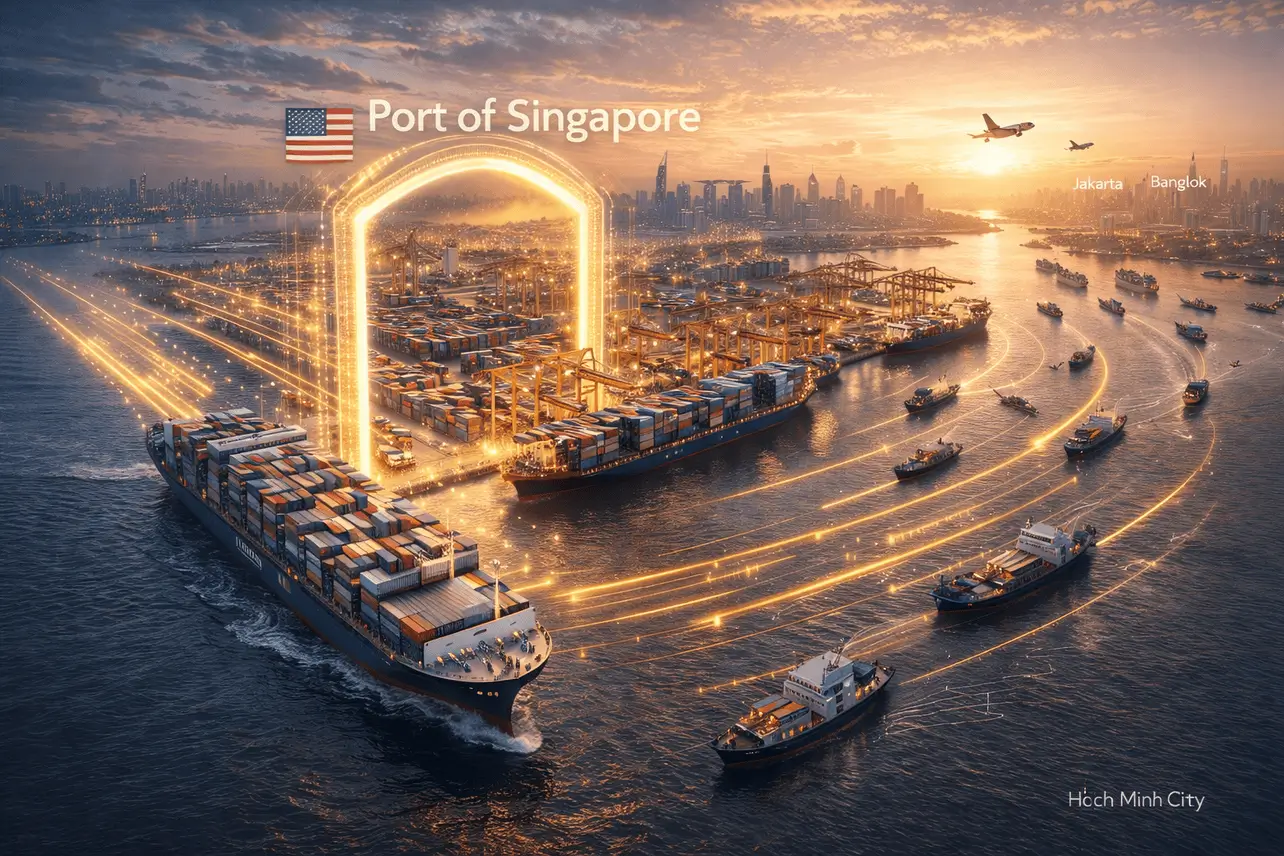
Singapore has firmly established itself as the essential Asia Pacific gateway for US businesses seeking global growth. Its world-class port and airport seamlessly connect American exporters to hundreds of diverse markets across Southeast and North Asia, ensuring fast and reliable distribution.
With its strategic location and efficient logistics infrastructure, shipping from USA to Singapore offers a reliable foundation for expanding reach in the region. By leveraging this central hub, companies gain better supply chain control, faster transit times, and a secure entry point into the dynamic Indo-Pacific trade network.
Why Singapore Serves as Asia Pacific Gateway for Shipping from USA to Singapore
Singapore sits at the entrance to the Strait of Malacca, one of the busiest shipping lanes in the world. Around 30 percent of global trade passes through this corridor, which links the Indian and Pacific Oceans. This position allows US‑origin cargo that lands in Singapore to reach key markets such as Malaysia, Indonesia, Thailand, Vietnam, China, Japan, and Australia with efficient onward connections.
The Port of Singapore ranks among the busiest container ports worldwide, handling more than 37 million to 41 million TEUs in recent years. Over 200 shipping lines call at Singapore and connect to more than 600 ports across 120+ countries. This high frequency of sailings gives US shippers flexible schedules, competitive rates, and lower risk of disruption.
Singapore has also built a strong regulatory and business environment. Customs processes are streamlined, English is the working language, and commercial law is clear and consistent. For US companies, this reduces friction, improves predictability, and supports long‑term logistics planning across Asia.
Advantages of Shipping Through Singapore Gateway
For shipping from usa to Asian markets, many companies land cargo first in Singapore and then distribute by feeder vessel, air, or truck into the region. This hub‑and‑spoke model helps businesses centralise inventory, shorten lead times into multiple countries, and lower total logistics cost.
From Singapore, regional distribution covers:
- Feeder vessels to secondary ports in Indonesia, the Philippines, Vietnam, and other ASEAN countries
- Road freight through Malaysia into the rest of mainland Southeast Asia
- Frequent air cargo departures from Changi Airport to major Asian cities for high‑value or urgent freight
By using Singapore as the main regional hub, US exporters can combine full‑container loads, cross‑dock shipments, and support e‑commerce or just‑in‑time production for multiple markets from one well‑connected location.
USA to Singapore Shipping Routes and Options
Shipping to singapore from usa follows two main modes: ocean freight and air freight.
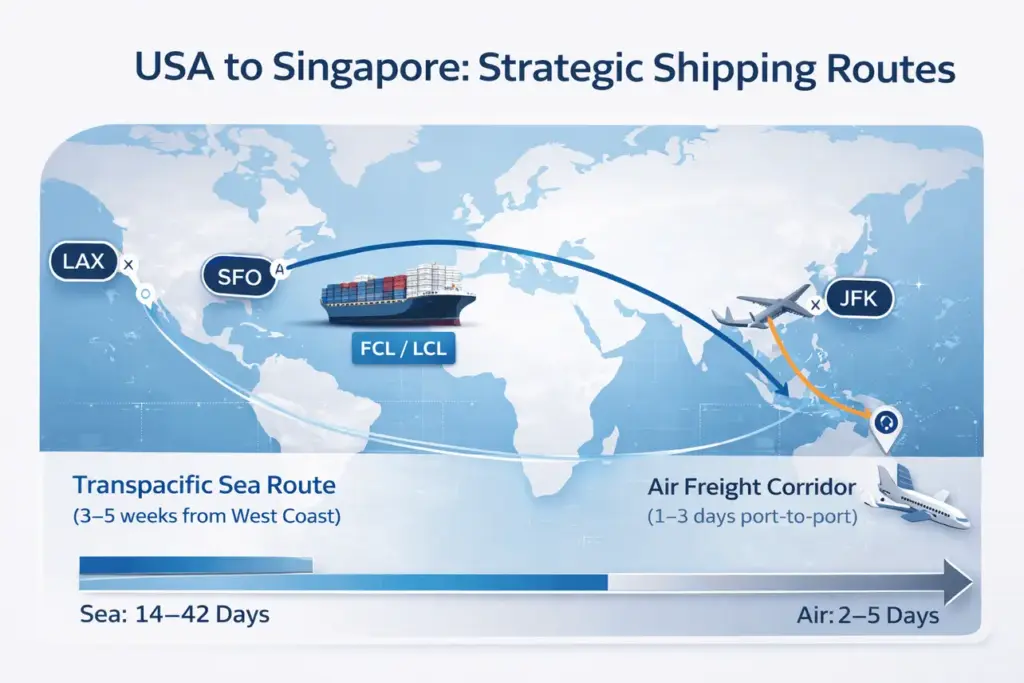
- Ocean freight (FCL/LCL): Typical sea transits from US West Coast ports such as Los Angeles or Long Beach to Singapore sit roughly in the 3–5 week range, depending on route, carrier, and transshipment stops. East Coast departures through the Panama Canal can take longer. Companies use full container load (FCL) for higher volumes and less‑than‑container load (LCL) for shared space.
- Air freight and express: For urgent or high‑value goods, air freight from gateways like LAX, SFO, JFK, and others to Changi Airport often takes 1–3 days port to port, and about 4–11 days door to door once handling and customs are included.
Business shippers use Singapore for a wide range of cargo: electronics, industrial machinery, pharmaceuticals, consumer goods, and automotive parts. The country offers advanced warehousing, bonded facilities, and well‑developed third‑party logistics (3PL and 4PL) services that can handle consolidation, labeling, value‑added services, and regional distribution.
Transit Times and Advantages of Sea Shipping from USA to Singapore
Sea shipping from usa to singapore remains the main choice for bulk and containerised cargo because it balances cost and capacity. Major US ports link to Singapore through regular liner services operated by large carriers.
Key points for sea freight:
- Port‑to‑port transit: Average figures range from about 15–25 days on faster services, and up to around 27–46 days when schedule gaps and peak‑season delays are included.
- Door‑to‑door lead time: Once origin drayage, export customs, import clearance, and last‑mile delivery are added, overall lead time can extend into the 4–7 week window depending on distance from the US origin and destination in or near Singapore.
- Capacity and stability: Large container ships and frequent services reduce capacity risk and help keep rates competitive over time.
Ocean freight through Singapore also supports regional transshipment. Containers from the USA can be devanned and re‑consolidated in Singapore for onward shipment to many Asian destinations, which helps reduce stock duplication in multiple local warehouses.
Understanding Singapore Shipping Timeline Expectations for Businesses
Many businesses search “singapore how long” to understand realistic schedules. Lead time depends on the mode and service pattern:
- Express courier: Roughly 2–5 days for most small parcels from the USA.
- Standard air freight: About 1–5 days airport to airport, and up to 10 days including pick‑up and delivery.
- Ocean freight: Around 14–42 days port to port for general global routes; US–Singapore lanes tend to fall in the lower half of that range, but can extend due to season, routing, and transshipment.
Companies should build in extra time for customs checks, documentation issues, and local holidays at both origin and destination. Working with an experienced freight forwarder in Singapore helps keep these risks low and gives more accurate schedule planning based on real carrier data.
Key Cost Drivers of Cheapest Shipping Options
Many logistics teams look for the cheapest shipping from usa to singapore while still protecting service quality. To reach that balance, they need to understand what shapes freight cost:
- Mode and service level: Ocean freight is usually cheaper than air on a per‑kilo basis, especially for dense or heavy cargo. Air and express offer speed but increase cost.
- Weight and volume: Carriers rate shipments based on chargeable weight, which reflects volume as well as actual weight. Efficient packing reduces cost per unit shipped.
- Route and carrier choice: Direct services, transshipment hubs, and carrier contracts influence rate levels. Singapore’s dense network of sailings supports competitive pricing through scale.
- Incoterms and responsibilities: Commercial terms such as FOB, CIF, or DAP define which party covers freight, insurance, and local charges. Clear agreements help avoid surprise costs at destination.
To secure the lowest sustainable rate level, many businesses use long‑term contracts or managed freight programs through a logistics partner based in Singapore that has strong relationships with ocean carriers and airlines.
Shipping from Singapore to USA Using the Gateway in Reverse
Trade flows are not one‑way. Shipping from singapore to usa also benefits from the same hub strengths. Many regional suppliers consolidate goods in Singapore before exporting to North America. This consolidation covers products made in ASEAN countries and beyond, including parts or goods assembled in Singapore’s own industrial zones.
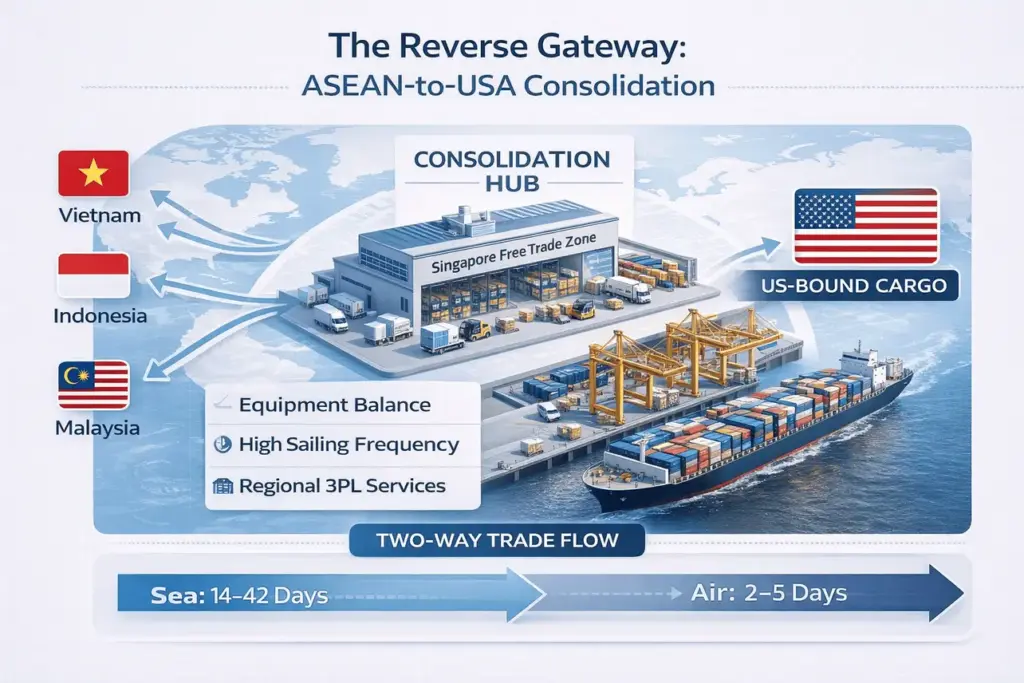
Using the gateway in reverse gives shippers:
- High sailing frequency from Singapore to US West Coast and East Coast ports
- Strong air cargo capacity for high‑value exports
- Stable handling operations and low port congestion, which supports on‑time departure and arrival
This two‑way flow of containers and air cargo strengthens Singapore’s position in global supply chains and helps carriers balance equipment, which can further support competitive freight rates.
Cheapest Shipping from Singapore to USA and Rate Levers
Firms that seek the cheapest shipping from Singapore to usa often coordinate regional consolidation in Singapore. By combining volume from several suppliers or production sites into full containers, they can secure better FCL rates and reduce per‑unit freight cost.
Other rate levers include:
- Shipping on flexible dates instead of peak departure days
- Choosing slower but cheaper ocean services when cargo is less time‑sensitive
- Aligning purchase order cycles so that containers leave on similar sailings instead of many small LCL moves
Because Singapore is a key transshipment hub, forwarders there usually have access to multiple carriers and alliances, which creates options for cost‑optimised routings.
Shipping Cost from Singapore to USA and Total Landed Price Factors
Shipping cost from Singapore to usa includes more than base freight. Businesses should factor in:
- Origin charges in Singapore: Handling, documentation, terminal charges, and customs‑related fees
- Ocean or air freight: The main leg, shaped by market conditions, fuel costs, and demand‑supply balance
- Destination charges in the USA: Port handling, import duties and taxes, customs brokerage, and domestic trucking
- Value‑added services: Warehousing, palletisation, labeling, or quality checks if these take place in Singapore’s logistics parks
Accurate landed cost models help finance and procurement teams compare suppliers and shipping options on a like‑for‑like basis and decide which mix of speed and price works best for their business.
How US Businesses Can Use Singapore as a Long Term Logistics Base
US companies that treat Singapore as a long‑term logistics base often see gains in resilience, speed, and market access. With strong port infrastructure, advanced automation, and the major Tuas Mega Port project in progress, Singapore continues to grow capacity for future trade volumes.
Key strategic steps include:
- Setting up regional distribution centres in Singapore’s free trade or bonded zones
- Using multi‑modal options that combine sea, air, and road across Asia Pacific
- Partnering with experienced freight forwarders and logistics providers that understand both US and Asian regulations and trade practices
This approach helps align logistics with broader growth goals across Asia, from serving large retailers to supporting fast‑moving e‑commerce networks.
Conclusion
Singapore offers US businesses a reliable, connected, and efficient platform for regional trade. From stable port operations and fast air links to streamlined customs and strong logistics partners, the city‑state acts as a secure bridge between the United States and Asia Pacific growth markets. By planning smart shipping from USA to Singapore and building regional flows through this hub, companies can reduce lead times, control costs, and support long‑term expansion.
Ready to streamline your Asia Pacific shipping operations? Partner with Sea Trans Agencies, your trusted logistics expert with proven expertise in USA‑Singapore trade routes. Our dedicated team delivers transparent pricing, on‑time performance, and personalized support for every shipment. Contact Sea Trans Agencies today and experience hassle‑free international shipping backed by decades of industry excellence.