
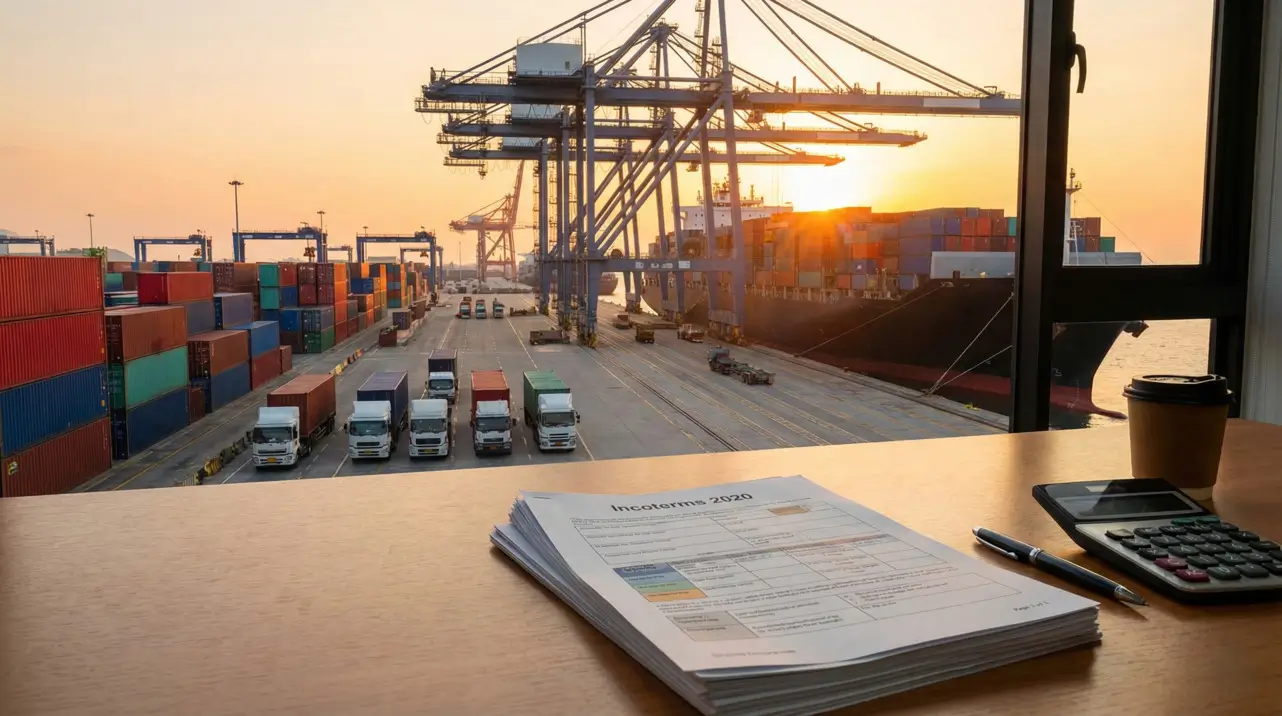
Starting your first international shipment can feel overwhelming. Who pays for the shipping costs? What happens if goods get damaged during transport? Who handles the customs clearance process? Incoterms answer all these critical questions. These international trade terms create clear rules between buyers and sellers.
They define costs, risks, and responsibilities in every shipment. Learning Incoterms helps you avoid costly mistakes and prevent disputes. This guide breaks down everything new exporters and importers need to know.
What Are Incoterms and Why Should You Care?
Incoterms stands for International Commercial Terms. The International Chamber of Commerce created these rules in 1936. They were designed to make global shipping easier and more standardized. Think of Incoterms as a universal language for international trade. When you write “FOB Mumbai” in your contract, traders worldwide understand immediately.
These terms tell you where the seller obligations end completely. They also show exactly where the buyer obligations begin. There are 11 different Incoterms available today. Each one is designed for specific shipping situations and transport methods.
Why Every Trader Needs to Master Incoterms
Without clear Incoterms in your contract, serious problems arise quickly. You ship products overseas expecting your buyer to handle customs procedures. They expect you to handle the same procedures instead. The shipment sits at the port accumulating expensive storage fees. Incoterms prevent these problems by answering critical questions upfront.
Who arranges export customs clearance at the origin port? Who pays import duties tariffs at the destination country? When you agree on an Incoterm upfront, everyone knows their responsibilities. This saves money, reduces stress, and builds trust between trading partners.
The Four Most Important Incoterms You Must Know
EXW: Maximum Control for Buyers
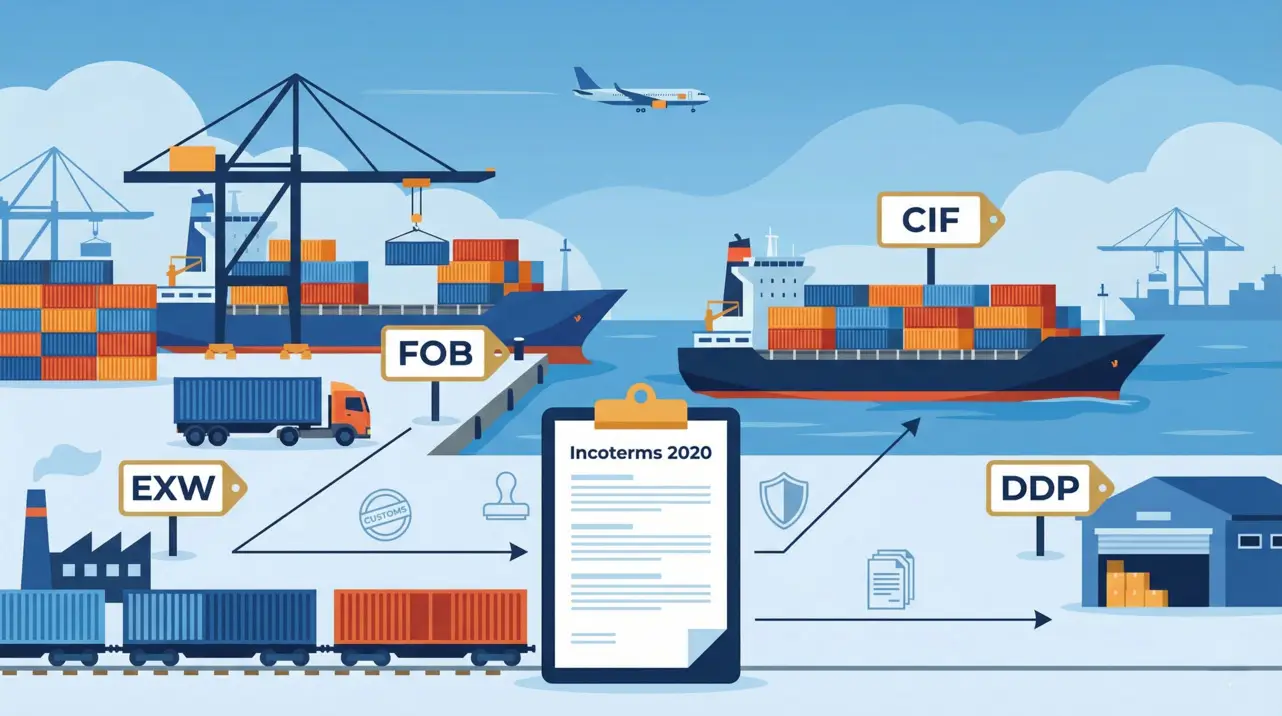
Ex Works gives buyers complete control over the entire shipping process. The seller simply makes goods available at their warehouse or factory. Everything else falls on the buyer including loading and trucking.
The buyer handles export customs clearance in the seller’s country. New importers rarely choose EXW because it requires complex procedures. However, experienced buyers who want total control over export import costs prefer it.
FOB: The Most Popular Choice for Ocean Shipping
Free On Board remains the favorite Incoterm for sea freight worldwide. The seller handles everything until goods board the vessel at port. This includes transport to the port and all loading costs. The seller also completes export customs clearance at the origin port
Once goods cross onto the vessel, the buyer takes complete control. Buyers love FOB because they control ocean freight costs directly. Sellers appreciate FOB because their responsibility ends at their home port. This clear division makes FOB (Free On Board) perfect for first-time traders.
CIF: Extra Security for New Importers
Cost, Insurance, and Freight offers more support than standard FOB terms. The seller pays for ocean transportation to your destination port. They also arrange basic cargo insurance for the ocean voyage. CIF works well when you want sellers to handle shipping arrangements.
The seller quotes one complete price including all freight charges. However, buyers still pay import duties tariffs at their end. They also handle all customs procedures at the destination port.
DDP: Zero Hassle for Buyers
Delivered Duty Paid represents the ultimate convenience for import buyers. The seller handles absolutely everything from start to finish. This includes export customs clearance, international shipping, and import customs clearance. They pay all import duties and tariffs required by local authorities.
Finally, they deliver goods right to your specified door location. The seller must understand import regulations in your country thoroughly. They calculate duties correctly and manage all ocean freight documentation properly. DDP suits buyers who want goods delivered ready to use immediately.
How to Pick the Perfect Incoterm for Your Situation
Match Your Experience Level
New to importing goods from overseas suppliers? Start with CIF or DDP terms. As you gain experience, switch to FOB for better cost control. Experienced exporters often prefer EXW or FOB to limit their costs. New exporters might choose CIF or DDP to attract more buyers.
Consider Your Transport Method
Some Incoterms only work for sea and inland waterway transport. Specifically, FOB and CIF apply only to ocean and water shipping. Others work for any transport method including air, road, and rail. Make sure your chosen Incoterm matches your actual shipping method.
Key Factors to Evaluate Before Choosing
When selecting the right Incoterm for your business, consider these factors:
- Your budget limits: Higher service Incoterms cost more but reduce hassle
- Control preferences: FOB gives buyers control while DDP gives sellers control
- Experience with customs: New traders benefit from CIF or DDP terms
- Insurance needs: Some Incoterms include insurance while others require separate arrangement
- Product value: High-value goods may require more comprehensive insurance coverage terms
Calculate everything including freight costs, insurance, and customs fees. Include import duties tariffs based on your product HS code. Sometimes a higher DDP price actually costs less overall. This happens when you add all export import costs together properly.
Breaking Down Export and Import Costs
Export Customs Clearance: Getting Goods Out Legally
Export customs clearance means getting government permission to ship goods internationally. The exporter submits documents like a commercial invoice and packing list. Clearing export customs costs money through customs broker fees. Under FOB, CIF, and DDP, sellers handle this entire process. Under EXW, buyers must manage export customs clearance even abroad.
Import Duties Tariffs: Taxes on Foreign Goods
Every country charges import duties to protect local industries effectively. These tariffs vary wildly based on product type and classification. Products get classified using HS codes from the Harmonized System.
Calculate import duties tariffs before finalizing your purchase decision completely. Under DDP terms, sellers pay these duties for you. Under FOB and CIF, buyers pay them at their destination.
Essential Ocean Freight Documentation You Need
Ocean freight documentation includes several critical papers for customs clearance. Here are the essential documents you must prepare:
- Bill of Lading: Acts as receipt, contract, and proof of ownership
- Commercial Invoice: Shows product description, value, and payment terms clearly
- Packing List: Details contents of each box or container with weights
- Certificate of Origin: Proves manufacturing country for duty calculation purposes
- Insurance Certificate: Provides proof of cargo insurance coverage during transit
Missing or incorrect documentation causes customs delays and storage fees. Both sellers and buyers must verify all ocean freight documentation carefully.
What’s Current with Incoterms in 2026
The International Chamber of Commerce updates Incoterms every ten years. The current version became effective January 1, 2020 officially. The biggest update replaced DAT with DPU terms completely.
Another significant change increased insurance requirements for CIP terms substantially. The current version also added clearer explanations about costs. These updates keep international trade terms relevant for today’s business.
Smart Tips for Using Incoterms in Contracts
Always specify which Incoterm version you’re using in contracts clearly. Write “FOB Mumbai (Incoterms current edition)” instead of just “FOB“. Both parties must agree on the exact term before signing. Include the specific location clearly in your contract and purchase order.
“FOB” means nothing without naming the exact port or terminal. Put all Incoterm details in your sales contract for reference. Make sure everyone understands who handles export customs clearance completely. Clarify who pays import duties tariffs at the destination country.
Conclusion
Mastering Incoterms transforms you from a confused beginner into a confident trader. These international trade terms protect your money by defining payment responsibilities. They clarify who pays for shipping, insurance, and customs at every step. Whether you choose FOB for cost control or DDP for convenience matters.
Picking the right term makes trading smoother and more profitable overall. Start with one or two common terms for your first shipments. Use them in small shipments first to gain practical experience. Gradually expand your knowledge as your international business grows successfully.
Ready to simplify your international shipping? SeaTrans Agencies specializes in handling all Incoterm complexities for exporters and importers. Our expert team manages everything from export customs clearance to ocean freight documentation. Contact SeaTrans Agencies today for reliable service and hassle-free global logistics solutions.