


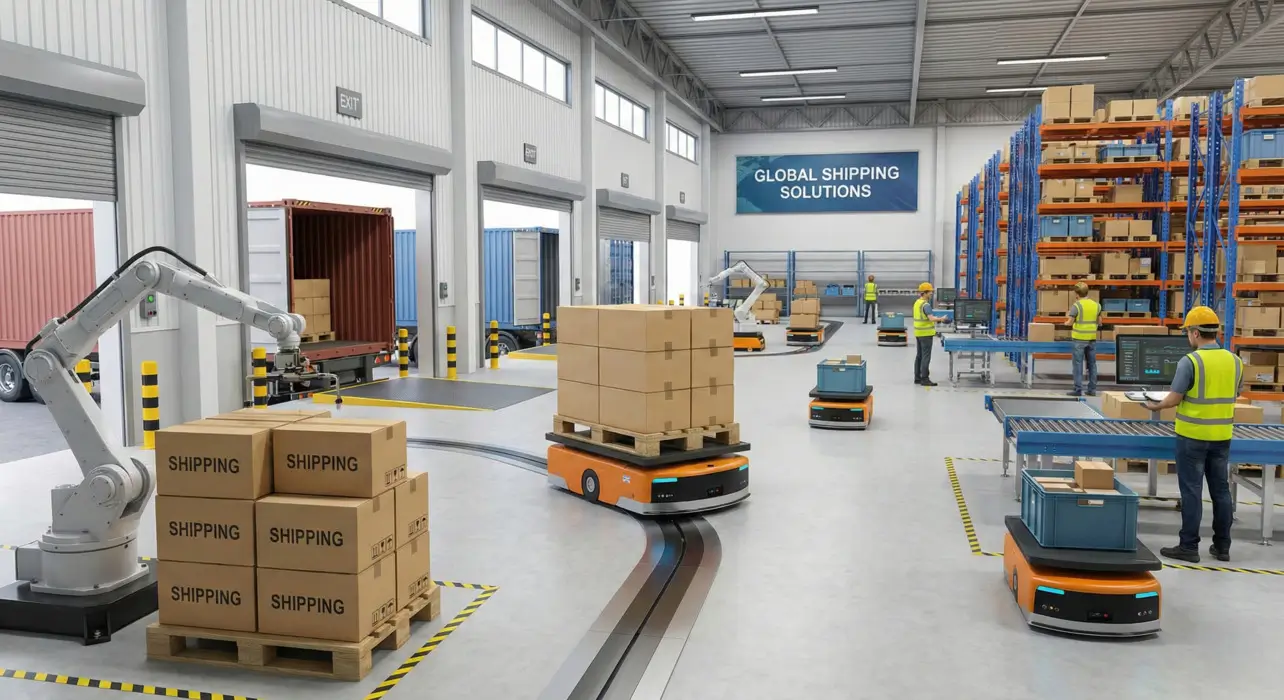
Warehouse automation helps warehouses store goods and ship orders faster. It uses machines and software to cut manual work and reduce errors. Many warehouses use robots, Automated Guided Vehicles (AGVs), and Autonomous Mobile Robots (AMRs) to keep goods moving during busy hours. These automated warehouse systems support picking, sorting, packing, and internal transport. Automation improves safety because machines handle more lifting and reduce long walking routes.
Understanding Warehouse Automation Technologies
An automated warehouse uses technology to run key tasks with less human effort. It connects equipment and software so work moves from one step to the next with fewer delays. This improves speed because items reach workstations faster. It improves control because the system records what moved and where it moved. Many teams call these connected platforms warehouse automation systems because they combine software, equipment, and work rules.
What Is Warehouse Automation?
Warehouse automation uses machines and software to control receiving, storage, picking, packing, and shipping. An automated warehouse system can assign tasks based on order priority and available capacity. Many systems use barcode scanning or RFID to confirm item identity and quantity. Many automation warehouse setups connect to a Warehouse Management System (WMS) so stock records stay current. The goal is to increase output, reduce mistakes, and lower the cost per order.
Why Warehouses Need Automation
Customers expect fast delivery and correct orders. Warehouses also face labor shortages and higher labor costs in many places. Warehouse automation solutions speed up repeat work like transport and scanning. Automation reduces injuries by cutting heavy lifting and long walking. Fewer errors reduce returns and customer complaints.
Automated Warehouse Robots: Leading the Change
Automated warehouse robots are machines that do tasks like carrying, sorting, or picking products. Some robots work in dedicated zones, and some work near people with safety rules. Robots reduce travel time by bringing items to stations or moving items to the next step. Robots also reduce damage because they handle items in a consistent way.
Types of Warehouse Robots
Robotic Arms and Picking Systems
Robotic arms pick items from bins or shelves and place them into totes or cartons. Cameras and sensors help the robot identify the item and guide the grip. Many systems verify the pick using a scan or a weight check. This supports automated warehouse picking when items have stable shapes and packaging.
Autonomous Shelf-Moving Robots
Shelf-moving robots lift a shelf unit and carry it to a pick station. Workers stay in one place while shelves come to them. This increases picks per hour by removing walking time. Fleet software schedules shelf moves so stations stay supplied.
Advantages of Warehouse Robots
Automated warehouse robots improve accuracy because they confirm the right location, the right item, and the right quantity during each task. They improve safety because they reduce heavy lifting and reduce the need to push heavy loads. Many automated warehouse systems update inventory in real time, so stock records stay current while work is in progress. Robots also increase throughput because they reduce idle time between tasks and keep orders moving.
AGVs and AMRs: Movement and Navigation
AGVs and AMRs both move goods inside a warehouse, but they move in different ways. AGVs follow fixed routes, while AMRs use sensors and maps to choose their path. Both options reduce manual cart movement and reduce manual pallet transport, which saves time and reduces worker fatigue.
Automated Guided Vehicles Explained
An Automated Guided Vehicle follows a preset path that the warehouse sets on the floor. The path can use tape, magnets, wires, or markers to guide the vehicle. AGVs repeat the same trips between areas like receiving, storage, and shipping, so they work best when the layout stays stable and the moves stay predictable.
Autonomous Mobile Robots Explained
An Autonomous Mobile Robot uses sensors and mapping to move without fixed floor guides. It can detect obstacles and take a different route, which helps in busy aisles. AMRs support layout changes because many updates happen in software, and they often carry totes, cartons, or small pallets between work zones.
How AGVs and AMRs Improve Operations
Both automated warehouse systems reduce manual travel and reduce worker fatigue during long shifts. They keep workstations supplied by delivering empty containers and removing full ones, so workers spend more time on picking and packing. Fleet software can schedule moves to reduce congestion and waiting, which helps more orders meet shipping cut-off times.
Automated Warehouse Solutions for Different Operations
Automated warehouse solutions must match order volume, product size, and service targets. A pallet-shipping site needs different tools than a parcel-shipping site. Clear goals help avoid buying equipment that does not improve daily work.
Small to Medium Warehouse Automation
Small and mid-size sites often start with modular warehouse automation solutions that are easy to expand. Many begin with AMRs, simple conveyors, and scan-based workflows. Many sites gain speed by reducing walking and storing fast movers closer to packing. These steps improve output without a full redesign.
Large-Scale Warehouse Automation Systems
Large sites often use automated warehouse systems that connect transport, sorting, and picking into one flow. These systems can include conveyors, sorters, robotic pick stations, and vehicle fleets. Central software can balance work across stations and keep priorities clear. Strong tracking reduces lost inventory and improves replenishment planning.
The Role of Technology in Modern Automation
Software connects machines, people, and inventory records into one control layer. A WMS assigns tasks and keeps stock and order status accurate. Good integration reduces bottlenecks by routing work to available capacity.
Integration and Control Systems
Integration lets robots, vehicles, scanners, and conveyors share data in real time. Control software can assign the next job to the nearest available device to reduce travel. Shared rules reduce conflicts because machines follow traffic and stop rules. These controls also improve safety through speed limits and restricted zones.
Data and Analytics
Automated warehouse systems generate data about task time, errors, and equipment health. Managers use this data to find slow points and fix process gaps. Analytics can predict maintenance needs and reduce downtime. Better reporting also supports better staffing plans for peak demand.
Challenges and Considerations for Warehouse Automation
Automation brings gains, but planning reduces risk. A good plan covers cost, layout, safety, and ongoing support. A phased rollout helps the warehouse keep shipping while testing new systems.
Initial Investment Costs
Many warehouse automation solutions require high upfront costs for equipment and installation. A warehouse should estimate payback using labor savings, throughput gains, and error reduction. Ongoing costs can include software licenses, spare parts, and service contracts.
Space and Layout Requirements
Automation needs space for travel routes, turning, charging, and maintenance access. Some systems require changes to rack layout, aisle width, and station placement. Poor layouts can create traffic jams that reduce automation benefits.
Workforce Transition
Automation changes job roles and daily routines. Workers often move from long walking routes to station work and exception handling. Training helps staff use the system safely and solve basic issues quickly.
Future Trends in Warehouse Automation
Warehouse automation continues to improve in flexibility and planning. Many systems now focus on quick deployment and easy scaling for seasonal peaks. Better visibility from receiving to shipping is also a key goal.
Artificial Intelligence Integration
AI can help automated warehouse systems plan pick paths and group orders. Machine learning can improve routing by learning where congestion happens. AI can support demand planning so fast movers sit closer to shipping.
Sustainability and Energy Efficiency
Many modern robots use efficient motors and smarter charging to reduce energy use. Better routing reduces travel distance and reduces wear on equipment. Better handling can reduce damage and returns, which reduces waste.
Hybrid Solutions
Many warehouses use a hybrid model where people and machines share tasks. Robots handle repeat transport and repeat picks, while people handle exceptions and checks. Hybrid rollouts support step-by-step adoption without stopping operations.
Conclusion
Warehouse automation helps warehouses ship faster, reduce errors, and control operating costs. Automated warehouse systems improve safety by reducing heavy lifting and long travel for workers. A clear plan for budget, layout, software, and training improves results and reduces delays. If you want to hire professionals, you can trust Sea Trans Agencies for reliable service.