
International trade works best when buyers and sellers communicate clearly. Without agreed rules, disputes can start over freight costs, customs duties, and who must prepare key documents. The International Chamber of Commerce created Incoterms to reduce these problems and set clear responsibilities for each stage of shipping.
These rules show who pays, who carries risk, and who handles paperwork during transport. When a business understands the different types of incoterms, it can cut customs delays and keep shipments moving across borders smoothly. This article explains what Incoterms are, lists all available terms, and shows you how to choose the right one to simplify your customs clearance process.
What Are Incoterms and Why Do They Matter?
Incoterm’s full form is International Commercial Terms. The International Chamber of Commerce made these rules to help businesses work together better in global trade. Each term uses three letters to show who pays for what and who takes responsibility at different stages.
When you understand inco terms means, you know who does each job during shipping. These terms answer key questions: Who books the transport? Who pays for insurance? Who files the customs forms? When both sides use the same term, they avoid confusion and fights. This becomes very important at customs, where missing papers or unclear duties can stop your shipment for many days.
The Standard List of Incoterms Available Today
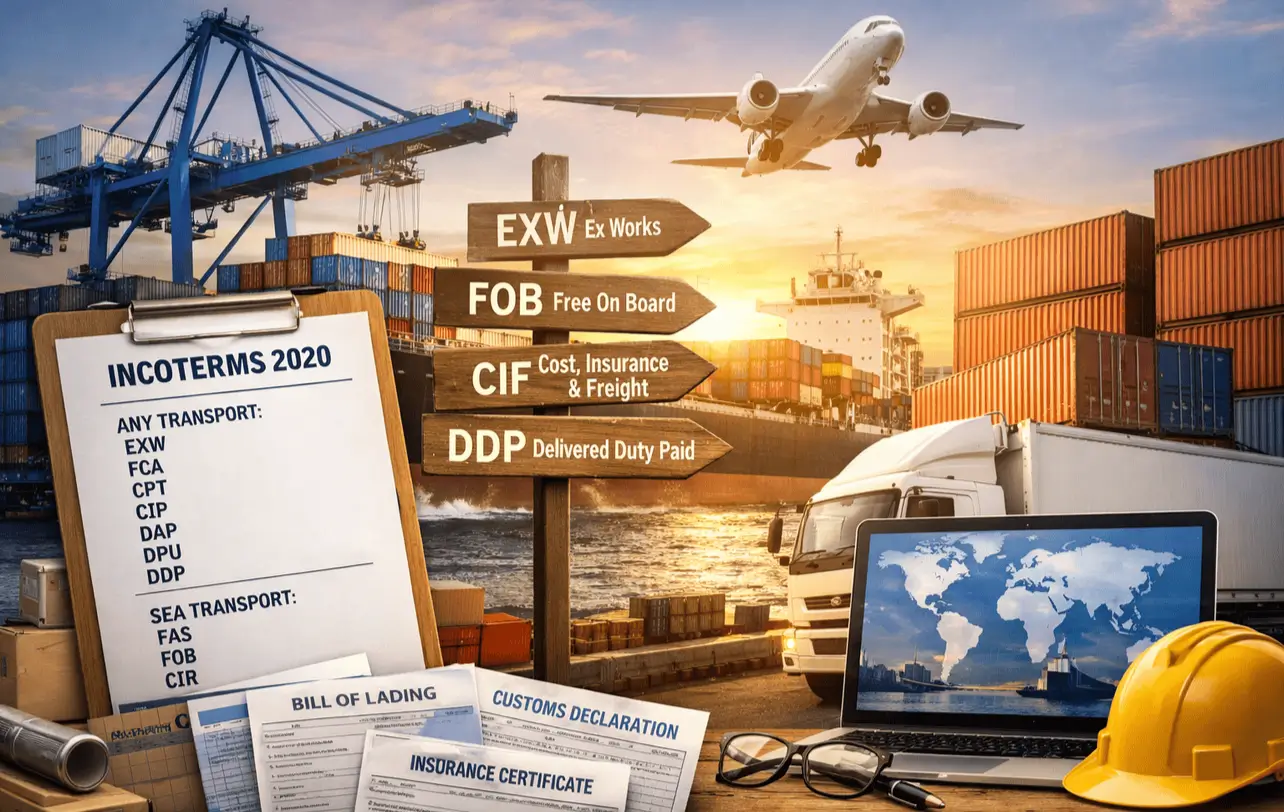
The list of incoterms we use today comes from the 2020 version. There are eleven terms split into two groups. Seven terms work for any way you ship goods – trucks, trains, planes, or ships. Four terms work only for sea and river transport.
Terms for Any Transport Method:
- EXW (Ex Works)
- FCA (Free Carrier)
- CPT (Carriage Paid To)
- CIP (Carriage and Insurance Paid To)
- DAP (Delivered at Place)
- DPU (Delivered at Place Unloaded)
- DDP (Delivered Duty Paid)
Terms for Water Transport Only:
- FAS (Free Alongside Ship)
- FOB (Free On Board)
- CFR (Cost and Freight)
- CIF (Cost Insurance and Freight)
Breaking Down Incoterms for Multiple Transport Options
Most modern business deals use the seven incoterms logistics rules that work for any shipping method. These terms give you choices but need careful attention to customs duties.
EXW: The Riskiest Option for Buyers
Under EXW, the seller only makes goods ready at their place. The buyer must pick up the goods and do everything else, including export clearance.
This causes big problems at customs. The buyer needs to file export papers in the seller’s country. Many buyers cannot do this legally in a foreign country. If the buyer cannot finish the export process, the goods stay stuck at the seller’s place. Sellers also have trouble because they cannot prove the goods left their country, which creates tax problems.
FCA: A Better Alternative for Export Clearance
FCA fixes many problems that EXW causes. With FCA, the seller does the export clearance and gives goods to a carrier the buyer picks. This handover happens at the seller’s warehouse or at a transport hub.
This makes customs easier. The seller knows their country’s rules and fills out the export papers. The buyer takes over once the carrier gets the goods. Each side handles customs in their own country, where they have proper registration and knowledge.
CPT and CIP: Splitting Transport Costs and Risks
Under CPT and CIP, the seller pays for shipping to the destination. But the risk moves to the buyer when the seller gives goods to the first carrier. The difference is that CIP includes insurance.
For customs, the seller handles export forms while the buyer does import clearance. The seller arranges freight, but the buyer controls import and pays all import duties. This stops sellers from dealing with foreign tax systems they do not know.
DAP and DPU: Who Handles Delivery and Duties?
DAP means the seller brings goods to a named place and keeps them ready for unloading. DPU means the seller must also unload the goods.
The seller clears goods for export, but the buyer still handles import clearance. If the buyer is slow with customs clearance, the goods wait at the terminal and collect storage charges. Both sides must work together closely so customs releases the cargo before delivery time.
DDP: Maximum Responsibility on the Seller
DDP puts the most work on the seller. The seller handles transport, export clearance, and even import clearance. The seller also pays all import duties and taxes.
Buyers like this setup, but it brings risks for sellers. The seller must register as an importer in the buyer’s country. If the seller cannot legally pay import taxes or does not have proper registration, customs will not accept the goods. DDP needs sellers to fully know the destination country’s customs rules.
Understanding Shipping Incoterms for Ocean Freight
Four terms work only for ocean and river transport. These shipping incoterms are old rules often used for bulk goods like grain or oil.
FOB: Popular for Clear Responsibility Division
FOB means the seller must load goods onto the ship. The seller does export clearance in their country. The buyer books the ship and handles everything after that.
FOB is popular because it creates clear lines. The seller makes sure goods legally leave their country. The buyer prepares for import duties early. This clarity cuts down customs fights a lot.
CFR and CIF: Freight Included in Seller’s Costs
CFR and CIF work like CPT and CIP but only for water transport. The seller pays ocean freight to the destination port. Under CIF, the seller also buys insurance.
The buyer takes on risk once goods are loaded but handles import clearance at the destination. These terms work well for commodities. But buyers need the shipping papers fast to file import forms and avoid port charges.
Making Smart Choices to Speed Up Customs
Picking the right type of incoterms directly changes how fast goods cross borders. A bad match between the term and your company’s abilities causes expensive delays.
Why Sellers Should Think Twice About DDP
Many exporters stay away from DDP for good reasons. Under DDP, the seller becomes an importer in a foreign country. This opens them up to audits and tax trouble in legal systems they do not know. If customs questions the value you declared, the seller must handle fights in another language and legal system. Most sellers like DAP or CPT better, where they control shipping but leave import duties to the local buyer.
Why Buyers Should Avoid EXW
Buyers need to be careful with EXW. The product price may look good, but total costs are higher. The buyer must pay a local agent to file export papers in the supplier’s country. If the supplier gives wrong product codes or missing licenses, the buyer cannot move the goods. FCA is usually smarter because the supplier handles following their own country’s export rules.
Essential Documents and Parties in Customs Clearance
Every customs process needs specific papers. The commercial invoice shows the value of goods and decides duty calculations. The bill of lading proves ownership and acts as a receipt from the carrier. Under terms like CIF, you also need an insurance certificate.
Freight forwarders help carry out these incoterms by arranging transport and documents. Customs brokers file the needed forms with government officials. Whether you use FOB or DAP, these professionals make sure you meet all legal needs. The chosen Incoterm tells the customs broker which costs to add when calculating duties.
Conclusion
Success in international trade depends on clear agreements and good planning. When you pick the right types of incoterms, you decide who pays duties and who files customs papers. This choice stops costly delays and legal problems at borders. Companies that learn these rules move cargo faster and protect their profit margins.Ready to eliminate customs headaches and streamline your global shipments? Partner with Sea Trans Agencies today. Our experienced team handles every detail of your customs clearance, ensuring your cargo moves smoothly across borders. Contact us now for a free consultation and discover how we can simplify your international logistics.