

Shipping goods from the US to the UAE is a key trade lane for many small and mid-size businesses. Finding cost-effective and cheaper ways to ship products internationally can make or break profitability. When your cargo does not fill an entire container, Less than Container Load (LCL) offers a smart solution for shipping from USA to UAE.
This method allows you to share container space with other shippers and pay only for the cubic meters you actually use. Instead of investing in a full container or expensive air freight, LCL provides an affordable middle ground that keeps your supply chain active without straining your budget.
Understanding LCL Consolidation for USA to UAE Trade Routes
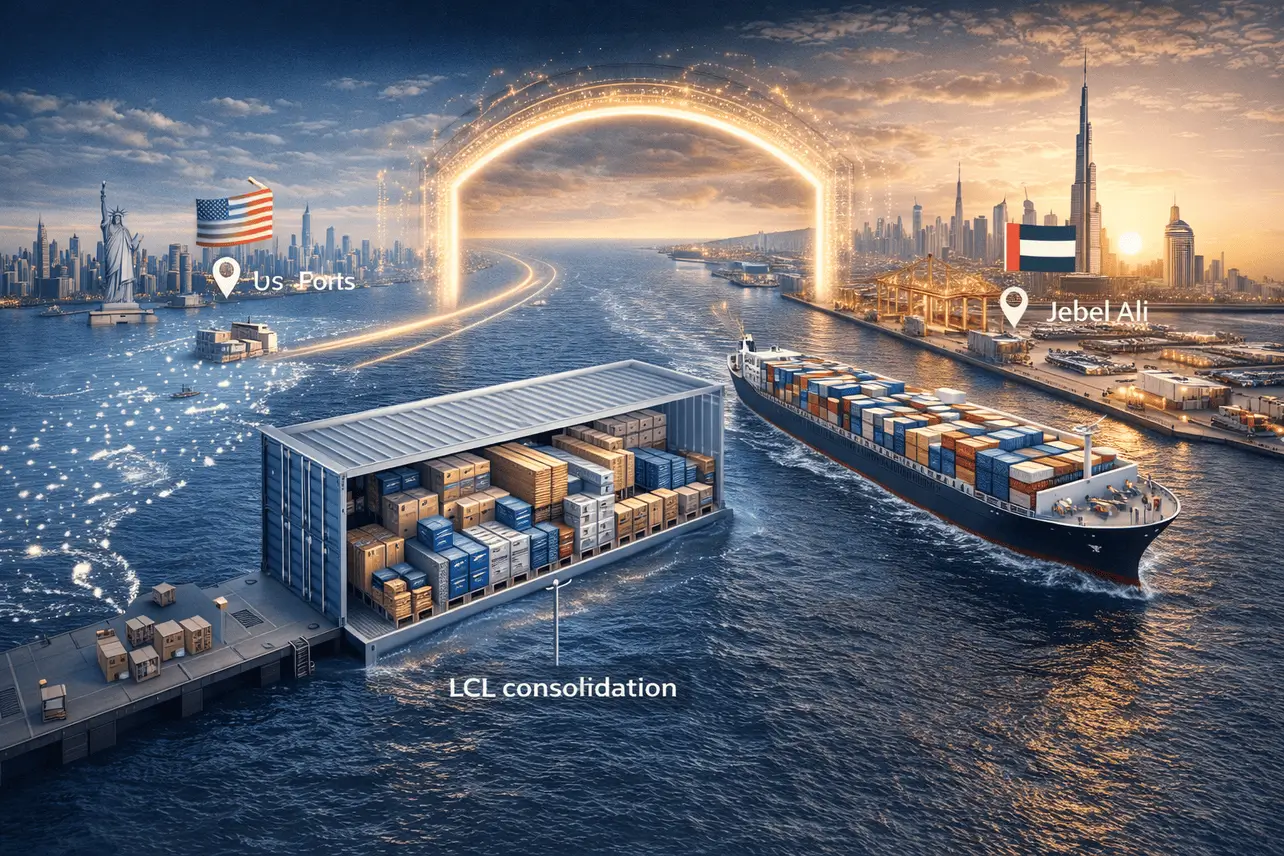
LCL (Less than Container Load) means your cargo shares space in a 20-foot or 40-foot ocean container with cargo from other shippers.
A freight forwarder or consolidator:
- Receives your cartons or pallets at a Container Freight Station (CFS)
- Consolidates them with other shipments going to the UAE
- Loads them into a shared container
- Manages deconsolidation and handover at the destination CFS in Dubai, Jebel Ali, Abu Dhabi, or another UAE port
You pay only for the space your cargo uses, rather than a flat rate for the entire container. This structure makes LCL attractive for:
- New exporters testing the UAE market
- E‑commerce and marketplace sellers
- Brands replenishing limited stock to UAE distributors
- Regular shipments that stay below a full container
LCL Rate Structure: Cost Comparison with FCL and Air Freight
Understanding cost structure is vital before you pick a mode for shipping to UAE from USA.
LCL pricing basics
Most LCL ocean freight from the US to the UAE is priced on a “weight or measure” (W/M) basis:
- Charge is based on the higher of:
- Volume in cubic meters (CBM)
- Weight in metric tons
- In practice, volume usually drives the cost for most general cargo
- There is often a minimum of 1 CBM, even if your cargo is smaller
Example (simplified from industry guidance): If the rate is 100 USD per W/M, and your cargo measures 2 CBM and weighs 500 kg (0.5 ton), you pay for 2 W/M, not 0.5.
On top of the ocean rate, you also pay:
- Origin local charges (CFS handling, documentation, export fees)
- Destination local charges (CFS handling, delivery order, deconsolidation)
These are also tied to CBM or W/M in most cases.
FCL pricing basics
FCL (Full Container Load) uses flat rates per container size, such as:
- 20-foot container
- 40-foot or 40-foot high cube container
You pay the full container cost, even if you use only half of the space. Local terminal charges are often bundled into the overall rate or charged per container, not per CBM.
Air freight pricing basics
Air freight prices are driven by chargeable weight:
- Chargeable weight = higher of actual weight or volumetric weight
- Even modest increases in weight can raise air cost sharply
Air freight wins on speed but usually loses on cost for heavy or bulky cargo compared with LCL ocean freight.
Cost Advantages: Why LCL Delivers the Cheapest Shipping from USA to UAE
For smaller loads, LCL usually beats both FCL and air on landed cost.
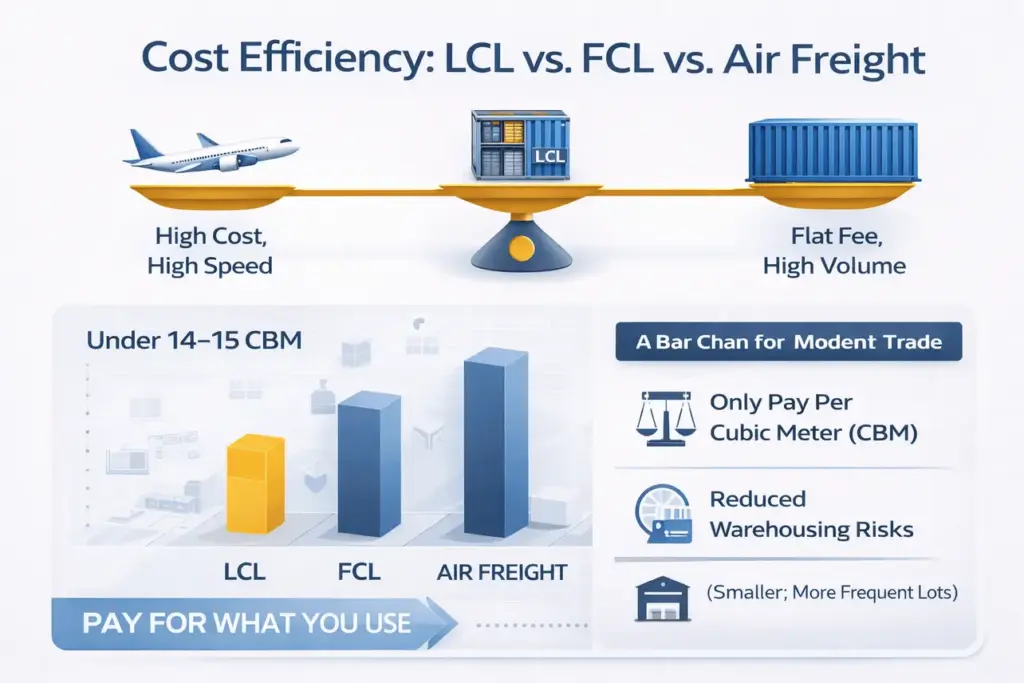
LCL vs FCL
Major carriers state that LCL is likely cheaper if you ship small boxes or palletized cargo that occupies only a fraction of a container. FCL becomes more cost‑effective only when your goods fill most of the container capacity.
In simple terms:
- Low volume cargo → LCL often cheaper, since you pay per CBM instead of a full-box flat fee
- High volume cargo → FCL often cheaper, because a full container rate spreads over more CBM
LCL vs air freight
DHL and other providers highlight that LCL is much cheaper than air freight on most trade lanes, and especially for higher volume shipments.
For shipping to UAE from USA, this difference is clear:
- LCL sea freight usually takes about 20–45 days, including consolidation and handling
- Air freight is often 2–8 days for the same route, but with a far higher cost per kilo
If your cargo is heavy or bulky and not extremely urgent, LCL usually gives you the lowest cost per unit delivered.
Optimal Shipment Profiles: When LCL Maximizes Freight Savings
The cheapest shipping from USA to UAE will vary by shipment profile, but LCL tends to win in these cases:
1. Volume below a full container
If your goods do not come close to filling a 20-foot container, LCL almost always beats FCL on cost. You avoid paying for unused space and share the container with other shippers.
2. Regular but modest replenishment
Brands that ship steady but modest volume can use LCL to:
- Refill UAE stock more often
- Reduce inventory risk in Dubai or Abu Dhabi
- Align shipments with sales patterns
Instead of waiting to build up a full container, you ship smaller LCL lots and keep cash flow flexible.
3. Heavy products that make air freight too expensive
Because air freight pricing reacts strongly to weight, dense cargo becomes very costly by air. LCL, by contrast, focuses more on volume than weight, so heavy items like hardware, machinery parts, auto spares, or packaged food often ship far cheaper by LCL than by air.
4. Door‑to‑door needs with a limited budget
Many forwarders offer door‑to‑door LCL services from US origins to UAE cities, combining:
- Pickup from your US warehouse
- Ocean LCL to Jebel Ali or other UAE ports
- Customs clearance and last‑mile delivery
This setup gives you predictable landed cost and can still stay below air freight spend, even with inland trucking included.
Primary Factors That Impact LCL Freight Rates to the UAE
To keep LCL cost low and predictable, you need to know what drives pricing.
Volume and cargo dimensions
- Measure each carton and calculate CBM accurately
- Optimize packing so you reduce unused space
- Avoid oversized cartons that inflate CBM and cost per unit
Even small changes in height or width across many cartons can increase total CBM and your invoice.
Origin and destination charges
Many shippers look only at the ocean rate and ignore local fees. For LCL:
- Origin CFS, documentation, and handling are per CBM or per shipment
- Destination CFS handling, deconsolidation, and delivery order are also tied to W/M
For example, some UAE providers publish rate tables that show rising charges as CBM increases from 1 to 10 CBM for LCL imports, while full-container rates are flat at 20-foot or 40-foot levels. This pattern shows how small loads benefit from LCL compared with full containers.
Trade lane and port pair
Transit times from the US to UAE ports like Jebel Ali vary by origin:
- East Coast ports such as New York often reach Jebel Ali faster than West Coast ports
- Typical port‑to‑port LCL transit runs roughly 30–50 days, depending on the route and service
Longer routes or indirect services can involve higher freight charges or additional handling.
Best Practices for Booking Economical LCL Freight from USA to UAE
To gain the full value of LCL, your internal process should be clear and structured.
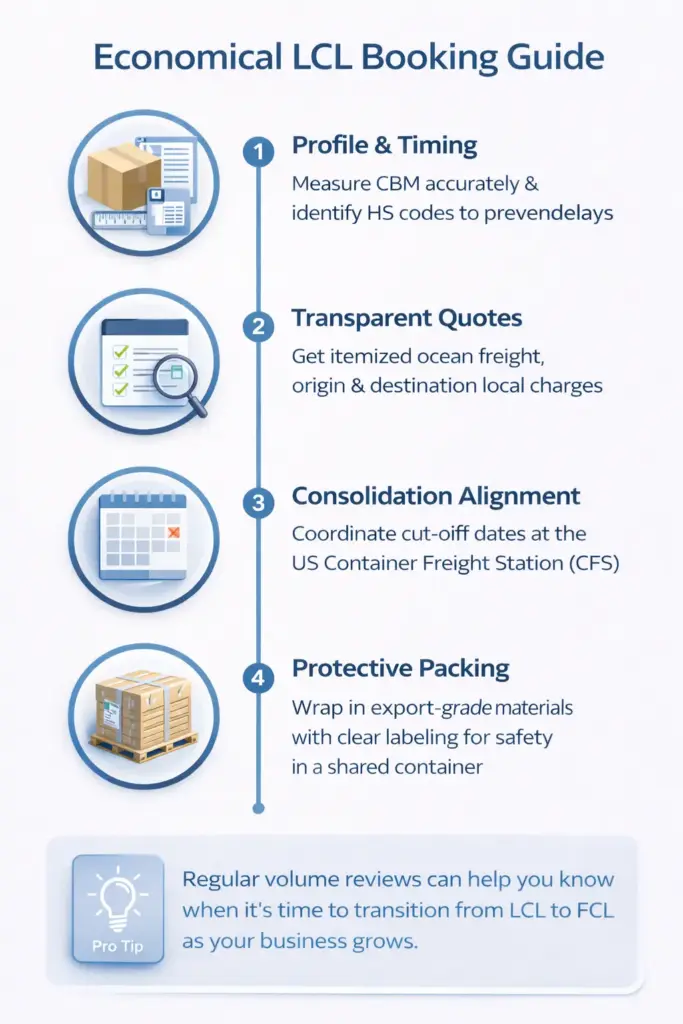
1. Define shipment profile and timing
- Confirm HS codes and product descriptions
- Decide how much stock you need in the UAE and by which date
- Convert this plan into carton count, CBM, and weight
This data lets forwarders quote accurate LCL rates and compare them with FCL and air.
2. Request detailed quotes from freight forwarders
When you ask for quotes for shipping from USA to UAE, insist on:
- Ocean freight per W/M
- Origin local charges itemized
- Destination local charges itemized
- Optional door pick‑up and delivery rates
- Estimated transit time window
This breakdown allows a true landed cost comparison against FCL and air.
3. Check consolidation schedule and cut‑off dates
Ask your forwarder:
- How often they run LCL consolidations to Jebel Ali or Dubai CFS
- Cut‑off dates for cargo receipt at the US CFS
- Typical deconsolidation time at destination before cargo release
Regular schedules and reliable deconsolidation reduce delays and storage charges.
4. Prepare documents and packing
Provide:
- Commercial invoice and packing list
- HS codes and country of origin
- Any required licenses or certificates for UAE customs
Use strong export‑grade packing, clear labels, and carton markings. Good packing reduces damage risk in shared containers, where cargo may be handled several times during consolidation and deconsolidation.
Common Errors That Increase LCL Shipping Costs to the UAE
The same logic that makes LCL efficient for the US–UAE also applies to UAE to USA shipping, but many businesses lose money through avoidable errors.
Common mistakes include:
- Ignoring volume growth: Continuing to ship by LCL even after volumes reach the point where FCL would be cheaper per unit
- Accepting unclear quotes: Booking shipments based on freight rate only, then facing unexpected origin and destination charges
- Poor cargo dimensions: Using irregular carton sizes that waste container space and push CBM up
- Slow clearance at destination: Failing to prepare UAE customs and delivery arrangements, which can trigger storage fees at the CFS
Regular review of volume trends and landed cost per unit helps you know when to shift part of your flow from LCL to FCL or to use air for urgent lines.
Conclusion
LCL helps small and mid-size businesses ship to the UAE with lower upfront cost because you share container space and can send smaller volumes. For small loads, it is often cheaper than booking a full container or using air freight, if you track your CBM, local charges, and schedule carefully.
Need a reliable shipping partner for your USA to UAE trade? Sea Trans Agencies offers transparent pricing, expert customs handling, and proven freight solutions. Contact us for your free customised freight quote today.