

Global trade moves fast, but unexpected stops often mess up supply chains and waste business time. If you’re shipping from India to USA, delays during busy seasons become a big problem that decreases revenue. These delays can hold up inventory, upset customers, and raise your shipping costs.
Proper planning helps exporters solve these common problems and keep deliveries on schedule. This guide shares practical tips to help you reduce delays and keep your shipments moving smoothly.
Understanding Peak Season Dynamics on India USA Routes
Major Causes of Transit Delays During Holidays
Peak season generally occurs twice every single year for international trade. The first busy period usually runs from August straight through October. Retailers purchase stock during this time for school and holiday sales. The second peak happens in January when factories reopen after holidays. Store owners place huge orders simultaneously, creating massive demand for shipping space.
At major ports, thousands of containers pile up during these busy months. Ships cannot load cargo fast enough to meet the high demand. Dock workers and heavy equipment cannot keep pace with the volume. This situation causes port congestion that adds weeks to typical transit times.
How High Demand Impacts Container Availability
High market demand creates a difficult chain reaction for many shippers. When demand rises, companies must compete aggressively for limited container space. Shipping india to usa becomes harder as carriers prioritize early bookings. Small companies often lose access to available capacity during these times.
Late bookings frequently face rejection or very long waiting lists. Tariff changes also trigger unexpected demand spikes for international businesses. When tariffs increase, importers rush to move goods before taxes rise. This panic buying causes importers to ship months ahead of schedule.
Navigating Port Bottlenecks in India and USA
Managing Congestion at Key Indian Ports
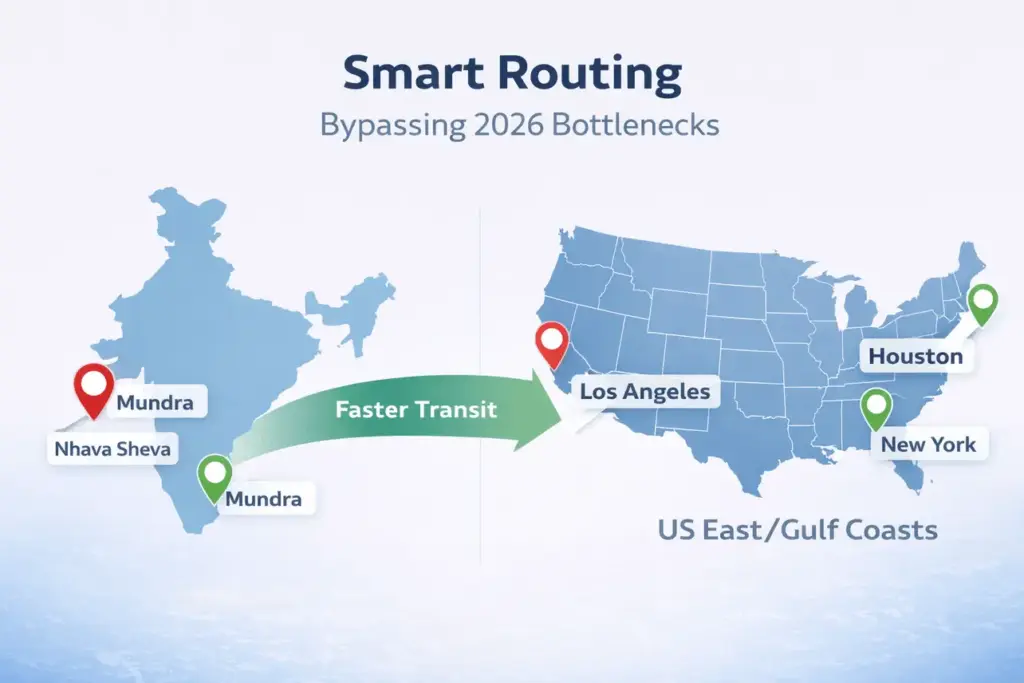
Three major Indian ports handle most cargo bound for American markets. Nhava Sheva (JNPT) in Mumbai processes the highest number of containers annually. However, the final rail link of the Western Dedicated Freight Corridor to JNPT is delayed until March 2026. This construction causes lingering rail congestion for cargo arriving from northern factories.
Mundra handles oversized cargo and is currently growing in capacity. During peak season, these ports slow down significantly due to volume.
- Nhava Sheva often experiences waits of five to seven days.
- Container handling equipment runs continuously and breaks down more frequently.
- Customs procedures create additional delays during these busy peak months.
Handling Port Congestion at Major US Gateways
Los Angeles and Long Beach receive the most cargo from India. During peak season, hundreds of ships wait offshore for dock space. Container trucks queue for hours just to enter the port gates. Inland rail yards fill up with containers waiting for further transport. India to usa shipping routes often face these specific bottlenecks annually.
New York and Newark ports on the East Coast face congestion. Houston and other Gulf Coast ports experience similar problems with volume. When ships arrive without dock space, they wait in the harbor.
Strategies to Accelerate Your India to USA Shipments
Strategic Port Selection for Faster Transit
Choosing the right port in India greatly reduces delays for exporters. Mundra port usually has shorter wait times than Nhava Sheva. Also, the new Vizhinjam International Seaport began Phase 2 expansion in January 2026. While it mainly handles cargo transfers between ships, its growing capacity offers a faster option for moving goods.
Consider using East Coast and Gulf Coast ports instead of Los Angeles. New York and Houston often have shorter wait times during peaks. This routing adds minimal transit time but saves days of delays.
Securing Capacity Through Advance Booking
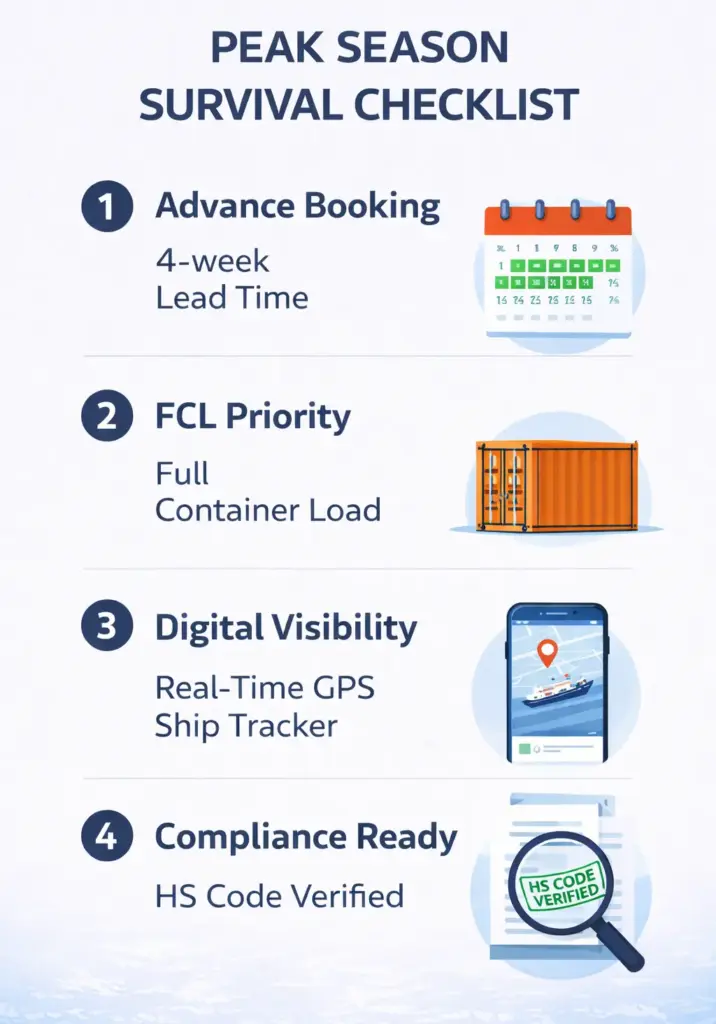
Booking weeks before your target date secures necessary container space. Early booking costs less and guarantees your specific departure dates. During peak season, late bookings often get delayed or rejected entirely.
Full Container Load shipments move faster than Less than Container Load. FCL containers ship directly from origin to destination without pauses. LCL shipments require consolidation at ports, adding weeks to transit time. If your cargo volume allows, choose FCL to reduce delays.
Leveraging Multimodal Routes to Bypass Traffic
Multimodal shipping uses ships, trains, and trucks together to move goods efficiently. This method avoids busy ports by using different transport routes. Goods can travel by train to another port to skip traffic jams.
Using different transport modes together cuts travel time by utilizing faster connections. It also gives you options when big ports get too crowded. Shipping agents know which combinations work best at different times of year.
Mitigating Weather Disruptions Throughout the Year
Monsoon season causes expected delays for sea shipping. Schedule shipments to leave India before June or after September. If you must ship during monsoon months, use air cargo instead.
Sign up for weather reports and port notifications because this helps you change shipping plans before delays occur. Port officials often announce upcoming traffic to help shippers get ready.
Utilizing Digital Tools for Better Planning
Enhancing Visibility with Real Time Tracking
Digital tracking shows exactly where your goods are at all times. Seeing real-time locations helps you spot delays immediately. You can call your shipping agent right away to find other routes.
Booking platforms and freight management software provide helpful predictive data. These tools show typical transit times for specific routes and seasons. They warn you when delays are likely to happen soon. This information helps you adjust delivery promises to your customers.
Proactive Scheduling and Volume Forecasting
Create a shipping calendar that clearly marks peak season dates. Plan major shipments outside peak windows whenever it is possible. Distribute orders across multiple sailings rather than concentrating all cargo.
Maintain constant communication with your chosen freight forwarder partner. Share demand forecasts so they can plan capacity for your goods. Forwarders can sometimes secure guaranteed space for their reliable customers.
Ensuring Compliance to Avoid Customs Holds
Preparing Accurate Documentation for Customs
Incomplete or incorrect paperwork causes customs delays for many businesses. Prepare all documents before shipment arrives at the port of origin.
- Classify products correctly using the appropriate international HS codes.
- Verify all tariff classifications with a licensed customs broker.
- Prepare commercial invoices and packing lists with absolute accuracy.
Partnering with Expert Freight Forwarders
Professional forwarders know port procedures and complex customs rules well. They manage documentation correctly and submit filings on the right schedule. Experienced forwarders have relationships that help move cargo much faster.
A good forwarder provides proactive communication about potential delays. They suggest alternate routes and offer cost-effective options for you. This expertise often saves money that delays would have otherwise cost.
Conclusion
Transit delays on trade routes cause real financial damage to businesses. Companies that plan ahead can reduce these delays significantly. Booking early and using smart strategies helps keep your supply chain moving. You can ship from india to usa with confidence by using these proven methods.
Digital tools and accurate documentation prevent many common shipping problems. Reducing transit time requires proactive management and strong logistics partnerships. Successful businesses always adapt their shipping strategies to match seasonal conditions.
Do not let shipping delays disrupt your business growth this season. Partner with a team that truly understands 2026 logistics challenges. Contact Sea Trans Agencies today for a personalized consultation and experience reliable service that keeps your cargo moving.