

Standard shipping containers changed the way the world trades. However, they have limits. A standard steel container has a fixed roof. This roof stops you from loading very tall items. It also makes it hard to put heavy things inside through the front doors. You need a special solution when your goods are too big or need a crane for loading.
An open top container solves this problem. It removes the solid roof to give you more space. This design allows you to ship heavy machines and tall equipment easily. This guide explains everything about these containers and their specific sizes.
What Defines an Open Top Container?
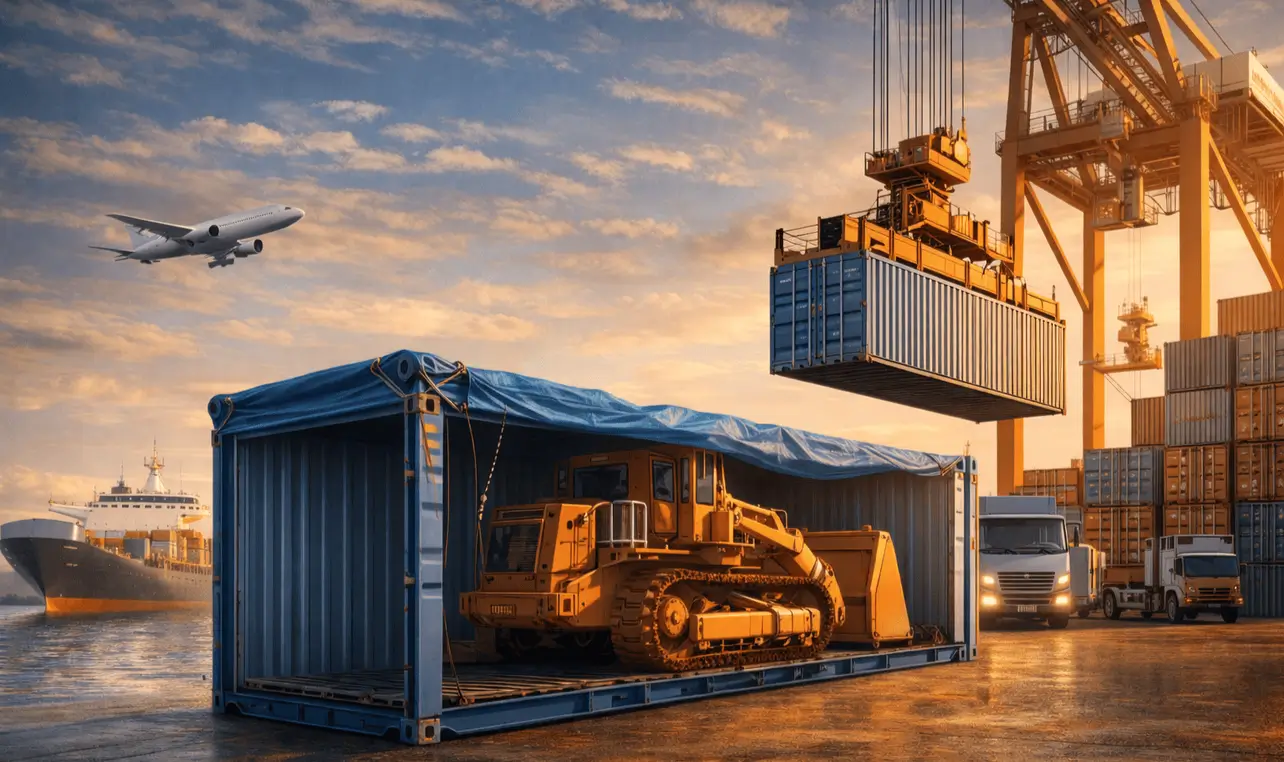
An open top container looks very similar to a general-purpose container. The walls are made of steel. The floor is made of wood. However, the roof is different. These containers do not have a solid steel top. Instead, they have an open top covered by a removable sheet called a tarpaulin.
You can take the roof off completely to load cargo. This design helps when cargo is too tall for a normal box. It also helps shippers who must load heavy items from the top using a crane. The container stays strong because of roof bows. These are metal bars that support the tarpaulin. They keep the container walls steady. You can take these bows off to load your goods and put them back on when you are done.
Key Structural Components
It is important to know the parts of these containers. This helps you plan your shipment better.
- Removable Tarpaulin: This is a strong canvas or plastic sheet. It covers your cargo. It protects your goods from wind, rain, and salty sea water. The material is usually very tough.
- Roof Bows: These are metal bars. They go across the width of the container. They hold the tarp up. They also keep the container shape correct. Without them, the walls might bend out.
- Swinging Door Header: There is a metal bar above the doors. You can often swing this bar open or take it off. This lets forklifts load tall items without hitting the top of the door frame.
- Lashing Rings: Strong steel rings are on the floor and bottom rails. You use these to tie down heavy cargo. This stops the cargo from moving during the trip.
- TIR Cable: This is a steel cord. It goes through holes in the tarpaulin. It locks the cover to the container so customs seals stay safe.
When Should You Use Open Top Containers?
Shippers use this equipment for specific reasons. The main reason is size. Sometimes your cargo is “Out of Gauge” (OOG). This means it is taller than a standard container. The open roof lets the cargo stick out the top.
The second reason is how you load the cargo. Some heavy machines are too heavy for a forklift. A forklift cannot carry them into a container safely. Even if the cargo fits inside, you cannot push it through the doors. An overhead crane can lower the cargo straight into the container from above. This way is safer and faster for heavy items.
Common cargo types include:
- Construction Machinery: Machines like bulldozers and excavators are often too tall for normal containers.
- Industrial Equipment: Large engines and generators are very heavy. You need a crane to load them.
- Glass and Stone: Large sheets of glass or stone slabs are safer to load from the top.
- Loose Materials: Things like scrap metal or grain can be dropped in from above.
- Long Cargo: Long pipes or steel bars are hard to fit through narrow doors. Top loading is easier.
Understanding Open Top Container Dimensions
Dimensions are very important when you plan a shipment. You must know the exact space inside the container. The outside size is the same as a standard container. But the inside space is a little different. The walls need to be stronger because there is no steel roof. This changes the inside size slightly.
20 Feet Open Top Container Dimensions
The 20ft version is the standard choice for heavy items. It is great for dense cargo. Heavy parts, steel coils, and raw materials fit well here.
- External Dimensions: The length is 20 feet (6.06 meters). The width is 8 feet (2.44 meters). The height is 8 feet 6 inches (2.59 meters).
- Internal Dimensions: The length is about 19 feet 4 inches (5.89 meters). The width is about 7 feet 8 inches (2.35 meters). The height is about 7 feet 8 inches (2.35 meters) up to the load line.
The 20 feet open top container dimensions are good for heavy weight. The maximum weight it can hold is often around 30,480 kg. This lets you carry a payload of about 28,000 kg. However, the floor must be strong enough for this weight. You must always check the metal plate on the container door. This plate tells you the exact weight limit for that specific unit.
40 Open Top Container Dimensions
If you have larger items, you need more length. The 40ft option is necessary for this. This container is good for big cargo or long machines. It does not hold as much weight per square foot as the 20ft version, but it holds more volume.
- External Dimensions: The length is 40 feet (12.19 meters). The width is 8 feet (2.44 meters). The height is 8 feet 6 inches (2.59 meters).
- Internal Dimensions: The length is about 39 feet 5 inches (12.03 meters). The width is about 7 feet 8 inches (2.35 meters). The height is about 7 feet 8 inches (2.35 meters).
When you look at 40 open top container dimensions, check the door height. If the header swings out, you get more room to load. The payload capacity is usually around 26,000 to 27,000 kg. The container itself is longer and heavier. This extra weight reduces the maximum cargo weight slightly compared to the shorter 20ft box.
40ft Open Top Container Dimensions (High Cube)
Sometimes, the standard height is not enough. The High Cube version gives you one extra foot of height. This is very important if your cargo is just a little too tall for a normal unit. If you use a High Cube, you might keep the cargo under the roof line.
- External Dimensions: The length is 40 feet (12.19 meters). The width is 8 feet (2.44 meters). The height is 9 feet 6 inches (2.90 meters).
- Internal Dimensions: The length is about 39 feet 5 inches (12.03 meters). The width is about 7 feet 8 inches (2.35 meters). The height is about 8 feet 8 inches (2.65 meters).
The 40ft open top container dimensions in the High Cube style help you ship taller items. You can still use the tarp to cover them. This protects the cargo better. It also saves money. Shipping cargo that sticks out of the top costs more. If you can fit it inside a High Cube, you avoid those extra fees.
The Loading Process Explained
Loading an open top container takes planning. You need specific equipment. The process is different from loading a regular closed box.
Step 1: Preparation
The workers remove the tarpaulin before loading starts. They fold it neatly so it does not get damaged. Next, they take out the roof bows. If you plan to load through the doors, they might swing the door header open too.
Step 2: Lifting
Operators use a crane to load from the top. The crane lifts the cargo high in the air. The operator lowers the item slowly into the container. This must be done carefully. It prevents damage to the container walls and the cargo. The operator needs to see clearly to put the cargo in the center.
Step 3: Securing
The cargo sits on the floor. Now, the securing team starts work. They use the lashing rings on the floor and sides. They use chains, straps, or wire ropes. They tie the item down tight. This stops the load from moving while the ship is at sea. This is very important because an open top container wall can flex a little more than a closed box.
Step 4: Closing and Covering
If the cargo is short enough, the staff puts the roof bows back on. They pull the tarpaulin over the top. They lock it with the TIR cable. If the cargo is too tall, they leave the bows off. They might use a bigger tarp to cover the tall cargo.
Open Top vs. Flat Rack Containers
You might think about using a flat rack container. Both are good for big cargo. But they are for different things.
An open top container has side walls. These walls give support. They also keep loose items inside. If you ship scrap metal or grain, you need these walls. The open top also keeps weather out better because the tarp fits tight.
A flat rack container has no side walls. It only has a floor and two end walls. You use a flat rack when the cargo is too wide. If your machine is wider than 8 feet, it will not fit in an open top. Flat racks are also good for very long items.
Choose the open top if height is the only problem. Choose the flat rack if width or length is the problem.
Cost Factors and Shipping Rates
Shipping special equipment costs more money. Several things change the price.
Ocean Freight Surcharges:
The base price for the ship is higher. Shipping lines have fewer open tops than normal boxes. Because they are rare, they cost more. Also, if your cargo sticks out the top, the ship cannot stack another container on top of yours. This wastes space on the ship. The shipping line charges you extra to pay for this lost space.
Loading and Handling Charges:
You might pay extra for the crane. Tying down the cargo also costs money for labor and materials. Normal forklifts cannot always do this work. You might need to rent a special crane.
Inland Transport:
Moving these containers on the road needs special permits. If the container and truck are too tall, you cannot drive on normal roads. You might need a special route or a safety car to follow you. Bridges and tunnels are big problems for tall cargo.
Protecting Your Cargo: Tarps and Covers
The tarpaulin is your main protection. Standard tarps are waterproof. But you must check them before the ship leaves. A small hole lets salt water in. This can ruin your machines.
Make sure the tarp is “TIR approved.” This means it meets customs rules. The cord goes through holes and locks the container. This shows that no one opened the cargo.
If your cargo is too tall, the normal tarp will not fit. You will need a custom cover. You can also wrap the cargo in plastic shrink wrap. This keeps moisture out. You should put drying packets inside the plastic to keep the air dry.
Important Safety Considerations
Safety is very important when you handle these heavy boxes.
- Center of Gravity: You must balance the weight. If the cargo is heavy on one side, the container might tip over when the crane lifts it. This is dangerous for everyone.
- Roof Bow Management: Keep the roof bows inside the container if you are not using them. If you lose a roof bow, the shipping line will charge you a fine.
- Door Header Checks: Make sure the door header is locked before the truck moves. A loose header makes the back of the container weak.
- Over-height Awareness: Truck drivers must know the total height. If they hit a low bridge, it destroys the cargo and causes accidents.
Industry Applications
Many businesses use these containers every day.
Mining and Energy:
Mines are often in far away places. They need big drills and rock crushers. These machines break into parts that fit in 20ft open tops. The floor is strong enough for the heavy weight.
Construction and Infrastructure:
Building roads requires big machines like rollers and cranes. The tracks fit inside the container walls. But the top of the machine is usually too tall. Shipping them this way saves time because you do not have to take the machine apart.
Logistics and Forwarding:
Shipping companies use them for hard-to-handle items. Big rolls of steel or plates of glass are safer to load from the top. It is safer for the workers. They do not have to go inside a dark metal box to move heavy things.
Recycling and Waste Management:
Old steel often travels in these containers. Cranes drop the sharp metal straight in. The steel walls keep the scrap inside so it does not fall out and damage the ship.
Conclusion
The open top container is a very useful tool for shipping. It helps when a standard box is too small. By taking off the roof, it lets you ship tall and heavy goods easily. You need to know the correct open top container dimensions. This helps you avoid delays and keeps your cargo safe. Whether you move big machines or raw materials, this container gives you the space you need.
Your cargo deserves the best protection and the smoothest journey possible. Don’t let logistical hurdles slow down your business operations. Partner with Sea Trans Agencies for reliable service and expert handling of your special shipments.