

Exporting goods from India to Nigeria often involves complex challenges. Exporters frequently struggle with strict customs rules and changing costs. Cargo may get stuck at Lagos ports due to bad paperwork. This delay often leads to high demurrage fees for the exporter. This guide explains essential steps for shipping from India to Nigeria effectively.
You will learn about shipping methods and required export documents today. We also cover critical Nigerian import procedures like Form M processing. Follow this checklist to ensure a smooth customs clearance procedure and avoid delays
Understanding Your Export Requirements from India
You must obtain an Import Export Code (IEC) to export from India. This ten-digit code is linked directly to your business identity. This Import Export Code supports legal export activity and essential customs paperwork processing. You need a valid business address to get this code approved.
Government officials will verify your address before they issue the code. Keep your exporter details consistent across every single shipping document used. Write your company name exactly the same way on all invoices. Mismatched details often cause customs officers to delay your cargo release.
Selecting the Right Shipping Method
When shipping from India to Nigeria, sea freight usually costs less for heavy goods. You often find better sea freight rates when you send heavy goods abroad. You can book a full container for large bulk cargo shipments. Transit time depends on the specific ship company and port schedule.
Always check the sailing dates with your partner before you book. Air shipping moves faster but costs more money for each kilogram. Use air freight when your buyer needs the goods very quickly. Some exporters send urgent items by air to save total time. Analyze FCL vs LCL shipping benefits based on the volume of your goods.
Preparing Essential Shipping Documents
Correct documents help speed up the customs clearance procedure in Nigeria. Your shipping partner can help, but you must check all details.
Document checklist (export side)
- Proforma invoice: Your buyer uses this paper to start banking steps in Nigeria.
- Commercial invoice: This document shows the sale price for duty and tax assessment.
- Packing list: This list describes every item, including its weight and package size.
- Bill of Lading: The carrier issues this paper when they accept your goods for shipment.
- Certificate of Origin: This specific document proves your goods were produced in India.
- Insurance certificate: This important paper shows your cargo has valid insurance protection coverage.
Simple accuracy checks (before cargo pickup)
- Check that product names match exactly on all your export papers.
- Ensure the buyer’s address is written the same way on everything.
- Count the boxes to ensure they match the packing list numbers.
Meeting Nigerian Import Regulations
Nigeria has special import rules that require early action from buyers. Your buyer works with a bank to handle these import approvals. Late starts often mean your cargo waits at the port unnecessarily. Delays at the port will cost you extra money in storage fees.
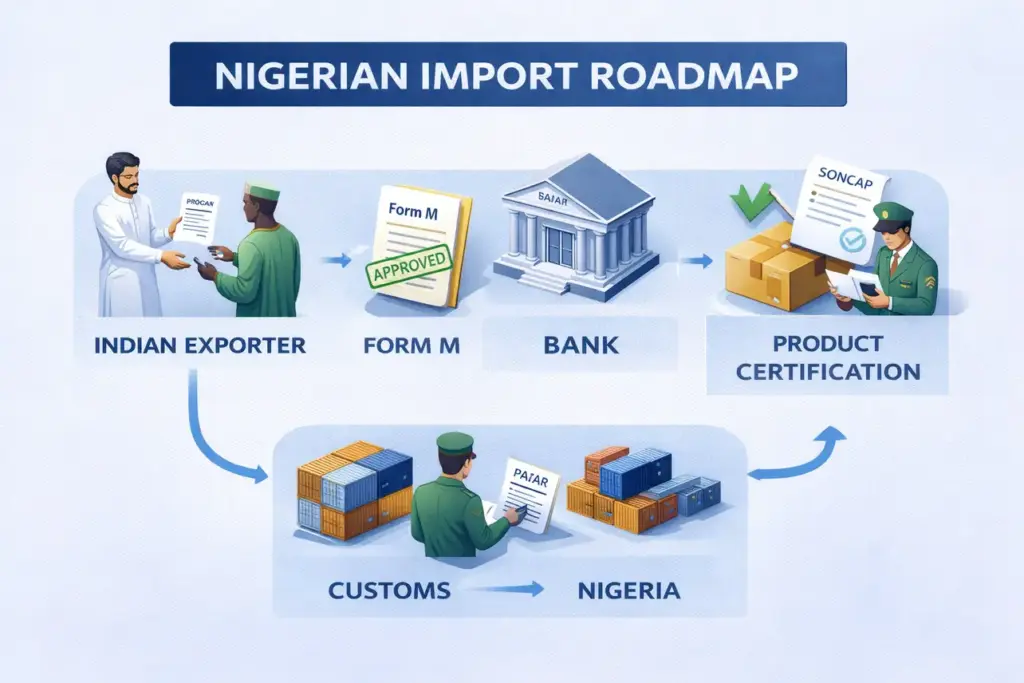
Step sequence your buyer usually follows
Form M and bank processing
The buyer opens Form M at their authorized bank in Nigeria. They must submit valid trade papers to the bank for checking. The bank and customs will approve the form or ask questions. After approval, the buyer shares the Form M number with you.
SONCAP and regulated products
Some products need a valid SONCAP certificate before they enter Nigeria.. Your buyer must get this product approval before you ship goods. Ask your buyer about these approvals before you pack any goods. Without this SONCAP certificate, your goods may be rejected at the border.
Understanding the Pre-Arrival Assessment Report (PAAR)
The PAAR is a critical customs document for imports into Nigeria. It tells customs officers exactly how much tax to charge you. Your buyer applies for PAAR through their bank and customs system.
Customs will not release cargo if the PAAR is not ready. Send all shipping papers to your buyer immediately after the shipment. This helps them finish the PAAR process before the ship arrives. Answer any customs questions quickly so the cargo keeps moving forward.
Checking Prohibited and Restricted Items
Nigeria strictly prohibits some specific items from entering the country legally. Check if your products are allowed before you book any shipping. Customs can seize your cargo if you send banned goods there.
Banned items include guns, used clothes, and dangerous waste materials. Some restricted items include specific foods and used cars over fifteen years. Always check the newest rules because the lists can change often. Sending banned items can result in severe fines for your buyer.
Hiring a Professional Freight Forwarder
A specialized freight forwarder who moves frequently from India to Nigeria can manage the entire shipping process for you. They book space on ships and prepare necessary export documents correctly. They also talk to customs officers to fix any document problems.
This support helps you avoid mistakes that cause expensive shipping delays. Cargo insurance protects your goods if bad things happen during transit. Loss or damage can occur when goods travel across the ocean. Ask your forwarder what the insurance covers before you ship goods.
Managing Shipping Costs and Timelines
Shipping costs depend on cargo size and the transport mode used. Sea shipping takes more days but costs less money than air. Air shipping is very fast but is also much more expensive. Ask for current sea freight rates and total costs to avoid surprises later.
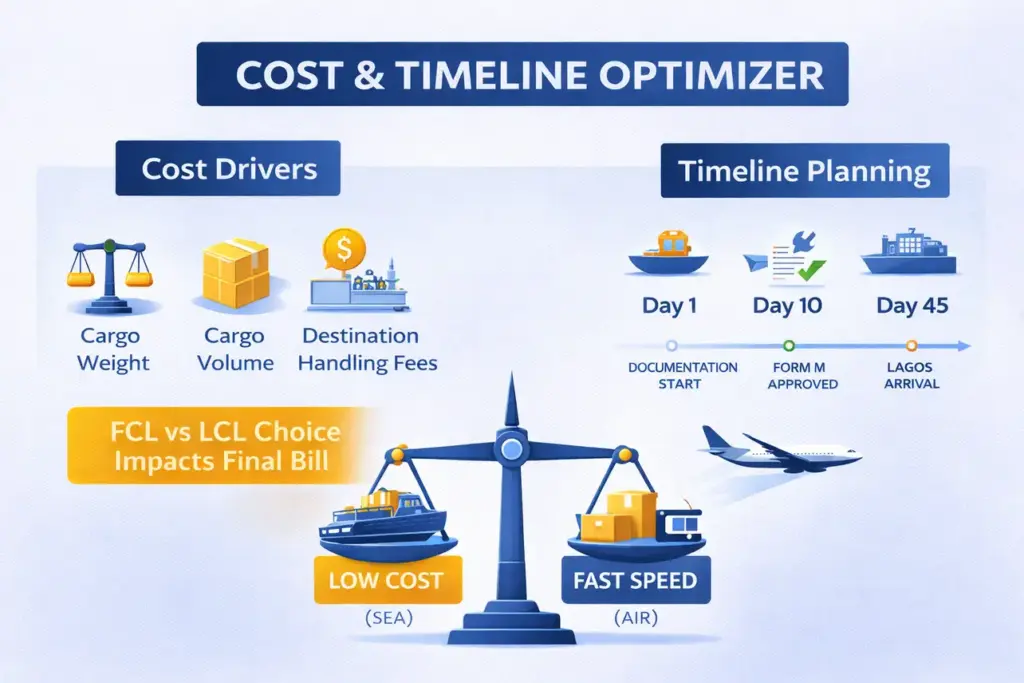
What usually changes the final cost
- Shipment type: Compare FCL vs LCL shipping costs for your specific cargo volume.
- Cargo details: The cost depends on how heavy and large the cargo is.shipping.
- Port and routing: Direct ships are faster than ships that stop at other ports.
- Destination steps: You must plan for customs fees and local handling charges.
Basic timeline planning tips
- Start paperwork early so your buyer can finish Form M quickly.
- Send copies of the invoice and packing list to your buyer.
- Plan extra time for customs questions during your first few shipments.
Final Verification Before Shipment
Check that your buyer started the necessary import steps in Nigeria. Confirm that they have processed the Form M and product approvals. Ensure the invoice and packing list details match your shipping papers. Talk often with your forwarder to solve problems as they arise.
Conclusion
Successful shipping to Nigeria requires correct papers and early buyer approvals. You must choose the right shipping method for your specific budget. Always verify product regulations to avoid fines and seized cargo issues. A skilled freight forwarder simplifies these complex steps for your business. They manage bookings and insurance to reduce risks and ensure delivery.
Consistent communication with your buyer builds trust and prevents costly errors. Do not let unexpected customs delays hurt your export business growth anymore. Proper planning transforms complex shipping processes into smooth business operations every time.
Ready to ship with confidence? Partner with experienced professionals who understand Nigeria’s customs inside out. Sea Trans Agencies acts as your trusted freight forwarder India to Nigeria, bringing years of expertise. Their team handles every detail from documentation to final delivery with complete transparency.