

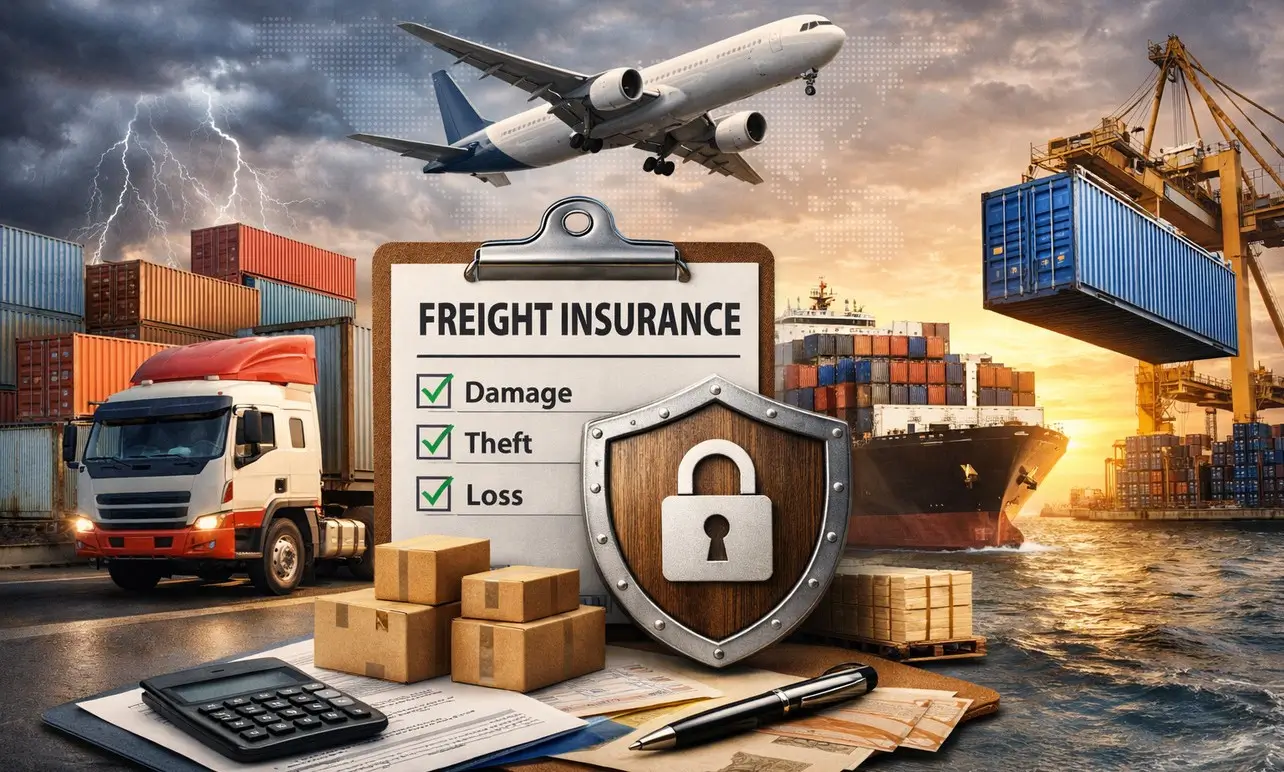
Freight insurance protects goods while they move through the supply chain, offering a vital safety net for businesses. It covers common transit risks such as damage, loss, and theft across road, rail, sea, and air shipments. Without this protection, a single incident can cause high replacement costs, delivery delays, and difficult customer disputes that harm your reputation.
By securing your cargo, you reduce financial stress and help your business keep shipping plans on track. This simple step ensures that unexpected events do not derail your logistics operations or profitability.
Understanding Freight Insurance Basics
Freight insurance is a policy that protects the value of goods during transportation. Many people also call it cargo insurance or shipping insurance because it applies to goods in transit. It covers losses that happen during loading, transit, and unloading, depending on the policy terms. It also helps when carrier liability limits do not match the real value of the shipment.
Many shippers mistakenly believe the carrier pays for everything if things go wrong, but carrier liability is often limited by law. Carriers may pay only a small amount per pound, leaving the shipper with a significant loss if high-value goods are damaged.
What Freight Insurance Really Means?
Freight insurance meaning is simple: it is financial protection against shipment risks during transit. The scope can include the insured value of goods and related charges that form part of the shipment value. The policy can apply from the pickup point to the delivery point based on the agreed transit terms.
Coverage can differ by route, mode of transport, and the type of goods you ship. This specific financial tool ensures that the capital tied up in inventory is not lost due to an accident on the highway or a storm at sea.
Marine Insurance and Freight Protection
Marine insurance is a broad category that covers risks linked to transport, including ocean shipments and parts of inland movement connected to trade. Freight insurance in marine insurance often relates to protection connected with freight charges and shipping-related financial exposure.
Marine cargo insurance focuses on the physical goods, while freight interest insurance protects the carrier’s or forwarder’s income if the voyage fails. Many international shipments use marine insurance structures because sea transport faces long routes and weather exposure.
CIF Terms in International Shipping
Cost, Insurance, and Freight (CIF) is a trade term used in international sales contracts. Under CIF, the seller arranges and pays for the freight to the destination port and also arranges insurance cover for the shipment. The buyer gets goods with shipping and insurance already handled up to the named port, which reduces buyer effort at the purchase stage.
However, buyers should still review the insurance level because CIF cover can be basic unless the contract asks for higher protection. Relying solely on the seller’s choice of insurance might leave gaps in coverage that only a buyer’s own policy would address.
Coverage Options for Different Shipments
Freight insurance policies can differ by risk scope, exclusions, and how claims get paid. The right option depends on cargo value, cargo sensitivity, route risk, and handling risk.
- All-Risk Protection: This gives wide protection for many causes of loss or damage, except items the policy excludes. It suits fragile goods and high-value electronics because it covers theft, non-delivery, and accidental damage.
- Named Perils Coverage: This protects against only the risks listed in the policy wording, such as fire or collision. It fits stable cargo types like bulk commodities where the shipper accepts gaps outside the listed perils.
- FPA Coverage: Free of Particular Average usually protects against major losses and limits protection for partial losses unless specific events occur. It works for cargo that can tolerate minor scratches but needs help if the ship sinks.
Calculating Your Freight Insurance Costs
Freight insurance cost depends on the shipment profile and the insurer’s risk view. Premium rates can change based on cargo value, cargo type, route, claims history, and coverage level. Add-ons like war risk, strikes cover, or temperature protection can increase the total premium.
Main Factors Affecting Premium Rates
Cargo value is a key driver because higher declared value increases the insurer’s possible payout. Cargo type also matters because theft-prone goods like laptops or damage-prone goods like glass need higher pricing.
Mode of transport can affect risk because each mode has different handling steps, transit time, and exposure to weather. Air freight often has lower damage risk than sea freight, which can result in different rate structures.
Additional Cost Considerations Matter
Route risk influences pricing because some corridors face higher theft rates, weaker infrastructure, or disruption risk. Packaging quality affects risk because strong packing reduces breakage and handling damage.
Claims history affects future pricing because repeated claims signal higher expected losses to insurers. Deductible choice can change the premium because a higher deductible shifts more risk to the insured party, lowering the upfront cost.
Meeting Different Business Logistics Needs
Different businesses ship different goods, at different frequencies, and across different lanes. Insurance structures can match this by offering per-shipment cover, annual cover, or project-based cover. This flexibility helps shippers control risk while keeping insurance spend aligned with shipping volume.
- Small Business Shipping: Small businesses often ship less frequently and may prefer per-shipment cover to avoid fixed annual costs. This model works well when shipment value changes often or when shipping volumes rise and fall by season.
- Enterprise-Level Programs: Large shippers often use annual or open policies that cover many shipments under one contract. This approach reduces admin work, supports faster shipment processing, and often secures better pricing.
- Cross-Border Trade: International shipping adds risks such as longer transit times and port handling. Insurance for international trade often considers sea exposure and container handling, ensuring claims are valid across borders.
Key Benefits for Your Business
Insurance improves financial control and reduces the impact of transport incidents on cash flow. It also supports better contract compliance with buyers, sellers, and logistics partners. Many businesses use it as part of a basic risk management plan for goods movement.
Complete Financial Loss Protection
Insurance can reimburse the insured value when goods suffer covered loss or damage during transit. This reduces the risk that one incident wipes out profit from multiple orders. It also supports faster recovery because the business can reorder stock without waiting for long negotiations with carriers. Instead of absorbing the full cost of lost inventory, the business can rely on the policy to restore its capital.
Meeting Contract and Compliance Standards
Many trade relationships require proof of insurance before a shipment moves. Partners may ask for insurance certificates to reduce disputes if goods arrive damaged. Clear cover also helps align responsibilities between shipper, consignee, and logistics provider. Having the right policy in place demonstrates professionalism and ensures that contractual obligations regarding cargo safety are met.
Professional Claims Management Support
A structured claims process helps the shipper collect documents, report losses, and follow timelines. Clear documentation such as invoices, packing lists, and survey reports often supports faster settlement.
Good claims handling also reduces conflict between buyers and sellers during replacement decisions. This support allows the logistics team to focus on operations rather than getting stuck in complex legal arguments over liability.
Choosing the Right Coverage
A business should match coverage to cargo value, cargo sensitivity, route risk, and shipping frequency. It should also review exclusions, deductibles, and claim requirements before it finalizes a policy. Regular reviews help because shipping lanes, cargo mix, and volumes can change over time.
Conclusion
Freight insurance protects shipments against common transit risks and supports stable logistics operations. It helps businesses manage losses from damage, theft, and unexpected events across local and international routes.
Clear understanding of coverage types, pricing factors, and shipment needs helps a shipper choose the right policy. For expert guidance in securing your supply chain with seamless freight solutions, you can count on Sea Trans Agencies to deliver reliable service.