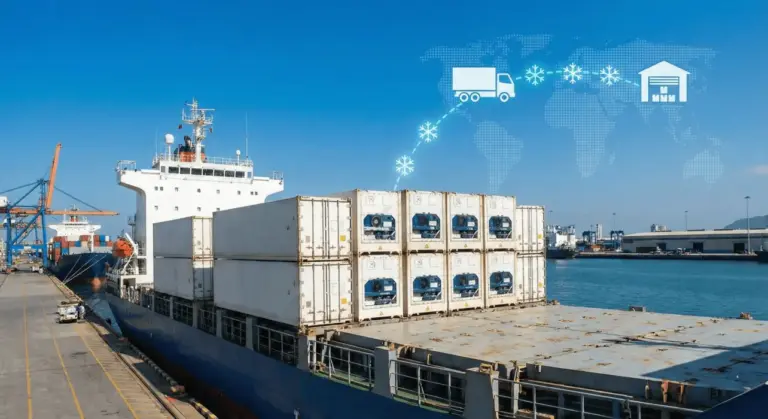



International trade requires clear rules for transport costs and risk management. Dap inco terms offer a balanced agreement for global buyers and sellers. The seller manages transport and delivers goods to a specific location. The buyer handles import duties and taxes upon the shipment’s arrival.
This guide explains every aspect of the Delivered at Place agreement. You will learn how to use this term to streamline shipping. We compare DAP with other terms to help you choose correctly. You will also find tips to avoid costly shipping mistakes.
Understanding DAP Incoterms: Definition and Core Meaning
The term DAP stands for Delivered at Place in official rules. The seller delivers goods by placing them at the buyer’s disposal. Goods must be ready for unloading at the named destination place.
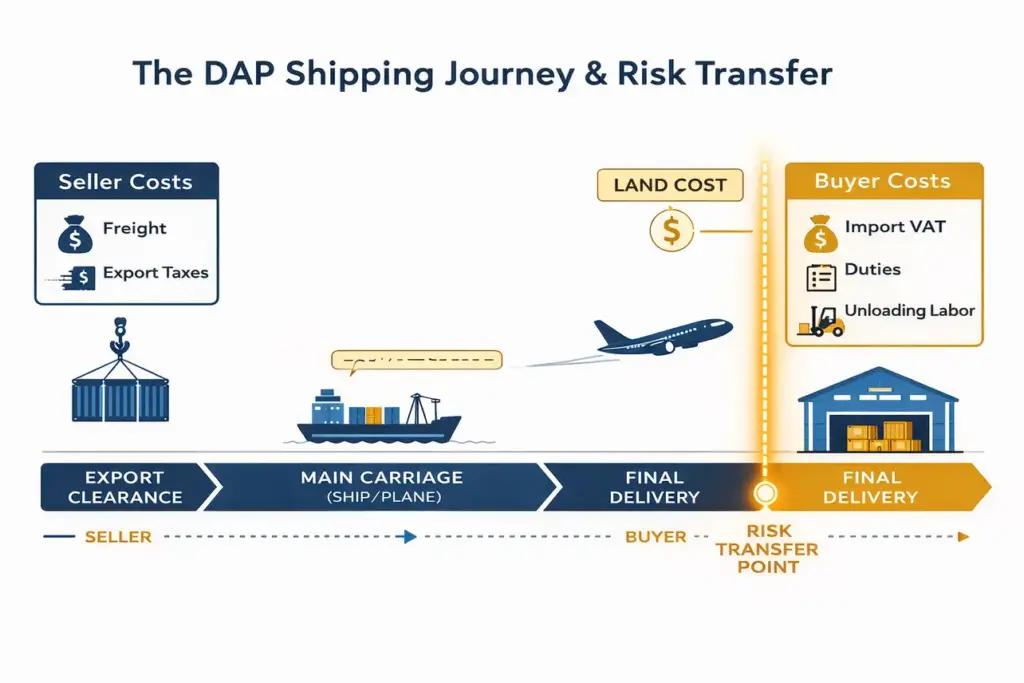
The seller bears all transport risks until the goods are delivered and ready for unloading. The seller manages the whole journey including main carriage and exports. The buyer assumes responsibility once the goods are placed at disposal at the named place. This structure makes incoterm dap a simple deliver-to-door shipping option.
The Role of the Named Place
The named place is the most critical part of this contract. This location can be a warehouse, factory, store, or cargo terminal. The seller pays for freight to reach this exact specific point. An unclear address causes carrier delays and potential loss of goods. A specific address tells the seller exactly where their liability ends.
Applicable Modes of Transport
You can use DAP terms for any specific mode of transport. It works for planes, ocean ships, road trucks, or rail trains. It also works for mixed transport like a truck and ship. This flexibility allows businesses to use dap shipping for various cargo.
Seller Responsibilities in DAP Shipping
The seller has major duties under these standard international trade terms. They handle logistics from their door to the buyer’s designated location.
Managing Transport and Costs
The seller hires the carrier to move goods to the destination. They pay for freight charges, extra fees, and origin handling costs. If a delay happens at the start, the seller pays it. This rule saves the buyer from surprise freight bills upon arrival.
Handling Export Clearance
The seller obtains all necessary export licenses for the specific shipment. They create commercial invoices and packing lists to leave the country. If customs stop the shipment, the seller must fix the problem.
Packaging and Marking Obligations
The seller must pack the goods well for the long trip. Ocean cargo needs water protection while air cargo needs strong boxes. The seller must mark packages clearly so they do not get lost. If goods break during transit, the seller loses their money directly.
Transferring Risk at Destination
Risk moves to the buyer only when goods arrive at delivery. If the ship sinks or crashes, the seller bears the loss. Incoterms do not require the seller to insure goods under DAP shipping terms. The buyer receives the goods with risk transferring at delivery, not after unloading.
Buyer Obligations for Delivered At Place Shipments
The buyer has fewer steps but they are critical for success. Their main jobs are legal import entry and unloading the cargo.
Unloading Goods at Destination
Under DAP, the buyer is responsible for unloading the goods at destination. The seller completes delivery when goods are available for unloading at the named place. Delays during unloading can result in detention or waiting charges billed to the buyer.. The buyer must have the right forklifts and labor ready there.
Managing Import Customs Clearance
The buyer carries the sole responsibility for all import clearance steps. They must provide import licenses and complete all required customs entries. The buyer often hires a broker to manage this process efficiently. If customs hold the shipment, the buyer pays for storage costs.
Paying Duties and Taxes
The buyer pays all import duties and Value Added Tax fees. These costs vary significantly by country and specific product type laws. The seller has no obligation to pay these local taxes ever. The buyer must budget for these expenses to calculate true costs.
Comparing DAP Inco Terms vs DDP Incoterm
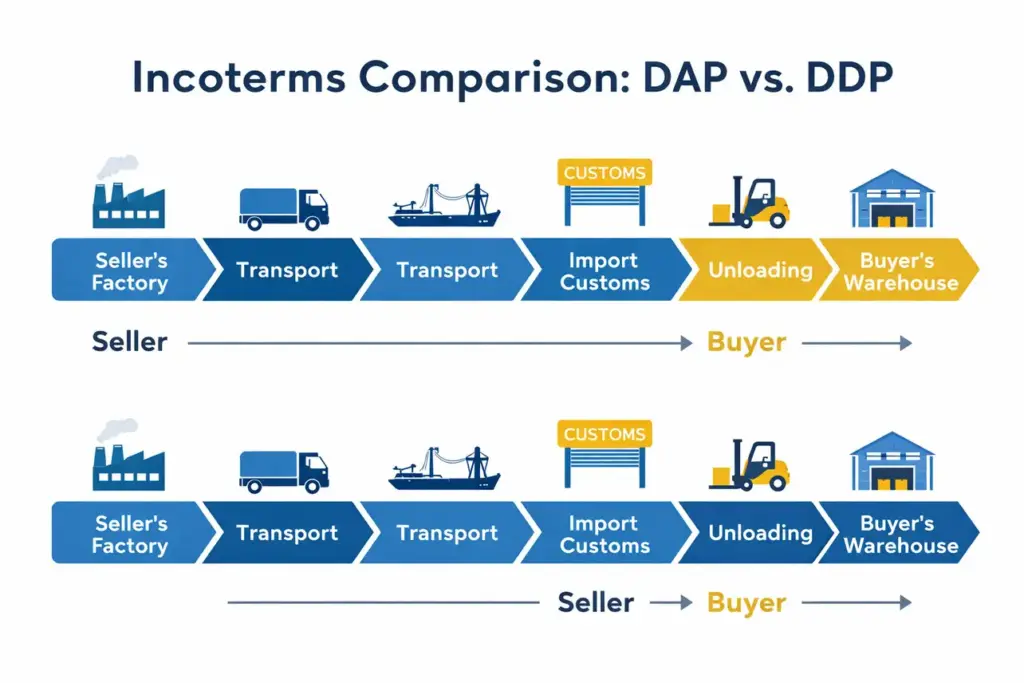
Many traders confuse DAP with DDP because both involve door delivery. The key difference is responsibility for import clearance and payment of duties and taxes.
Differences in Import Duties
The main distinction is that the buyer pays import duties here. Under ddp incoterm, the seller pays these costs and taxes entirely. DDP places the maximum obligation on the seller for the transaction. Dap inco terms share the burden at the customs border line.
Differences in Clearance Risks
Import clearance always carries the risk of inspections and audit checks. Under DAP, the buyer manages this risk at their own border. Under DDP, the seller manages it which can be very risky. DAP is safer for sellers as buyers handle local compliance.
Detailed Comparison Table
| Feature | dap shipping | ddp incoterm |
| Delivery Point | Named place at buyer side | Named place at buyer side |
| Export Clearance | Seller handles export steps | Seller handles export steps |
| Transport Cost | Seller pays freight costs | Seller pays freight costs |
| Import Duties | Buyer pays import duties | Seller pays import duties |
| Import Taxes (VAT) | Buyer pays import taxes | Seller pays import taxes |
| Unloading | Buyer unloads the cargo | Buyer usually unloads cargo |
Best Scenarios to Use Incoterm DAP
Choosing the right incoterm depends on your business partner’s capabilities. DAP is ideal when parties want a fair risk division.
When the Seller Controls Freight
Sellers often have volume contracts that offer very low freight rates. Using incoterm dap allows the seller to arrange transport cheaply. The seller ensures goods move smoothly without needing a buyer’s help.
When the Buyer Has Local Knowledge
Importers usually know their local customs rules better than foreign sellers. DAP allows the buyer to handle imports with their own broker. This prevents delays from foreign sellers navigating unfamiliar local tax laws. It effectively leverages the buyer’s local strengths for the clearance process.
When Final Delivery is Complex
DAP works well when the destination is far from the port. The seller arranges the entire journey to the final address directly. The buyer does not need to arrange separate trucking from ports. This service simplifies logistics while keeping tax duties completely separate.
Common DAP Shipping Mistakes to Avoid
Traders often make simple errors that lead to extra legal costs. Avoiding these pitfalls ensures a smooth transaction for all involved parties.
Using Vague Destination Addresses
A contract that simply lists a city name is very dangerous. The carrier might deliver to a depot instead of your warehouse. Parties must specify the exact street address to ensure accurate delivery.
Ignoring Terminal Handling Charges
Carriers charge fees at the terminal before releasing cargo for delivery. Responsibility for terminal handling charges should be clearly defined in the sales contract. Disputes arise if the contract is unclear about these specific fees. Both sides must agree on who pays for terminal fees.
Misunderstanding Unloading Rules
Buyers should not assume drivers will unload cargo under DAP delivery terms. Under DAP, the driver only brings the vehicle to the dock. The buyer must provide labor and equipment to move the cargo. Clarifying this expectation prevents arguments at the warehouse door later.
Failing to Insure the Goods
The seller carries risk until delivery so they should buy insurance. Cargo insurance is not automatic under DAP and must be arranged separately. If the seller does not insure, they lose money on damage. Parties should confirm insurance coverage in writing to avoid big losses.
Calculating Total Costs for DAP Shipments
Buyers must calculate total landed cost to see if prices work. The invoice price is not the final cost for the buyer.
Seller’s Cost Components
The seller includes manufacturing and packaging costs in their final price. They also add export duties and main freight to the total. They add a margin for risk taken during the long transit. This total forms the DAP price quoted to the buyer.
Buyer’s Additional Expenses
The buyer must add the import duty rate to product value. They must also add customs fees and any tax like VAT. Finally, they add the cost of labor for unloading the goods. Adding these figures gives the true landed cost for the buyer.
Example Calculation
Imagine a buyer purchases machinery under dap shipping terms today.
- DAP Price (Invoice): $50,000 includes freight to factory
- Import Duty (5%): $2,500 based on value
- Merchandise Processing Fee: $150 for customs entry
- Unloading Labor: $350 for local workers
- Total Landed Cost: $53,000 is the final total
Conclusion
DAP incoterms offer a balanced solution for global trade tasks today. The seller uses logistics power to move goods to the destination. The buyer uses local knowledge to handle import legality and taxes. This separation protects the seller from foreign tax complications effectively. Traders who define the place clearly will find DAP very effective.
Do you need a reliable partner to simplify your shipping? Sea Trans Agencies brings deep expertise to deliver your cargo safely. Contact our team today for professional solutions that support your growth.