


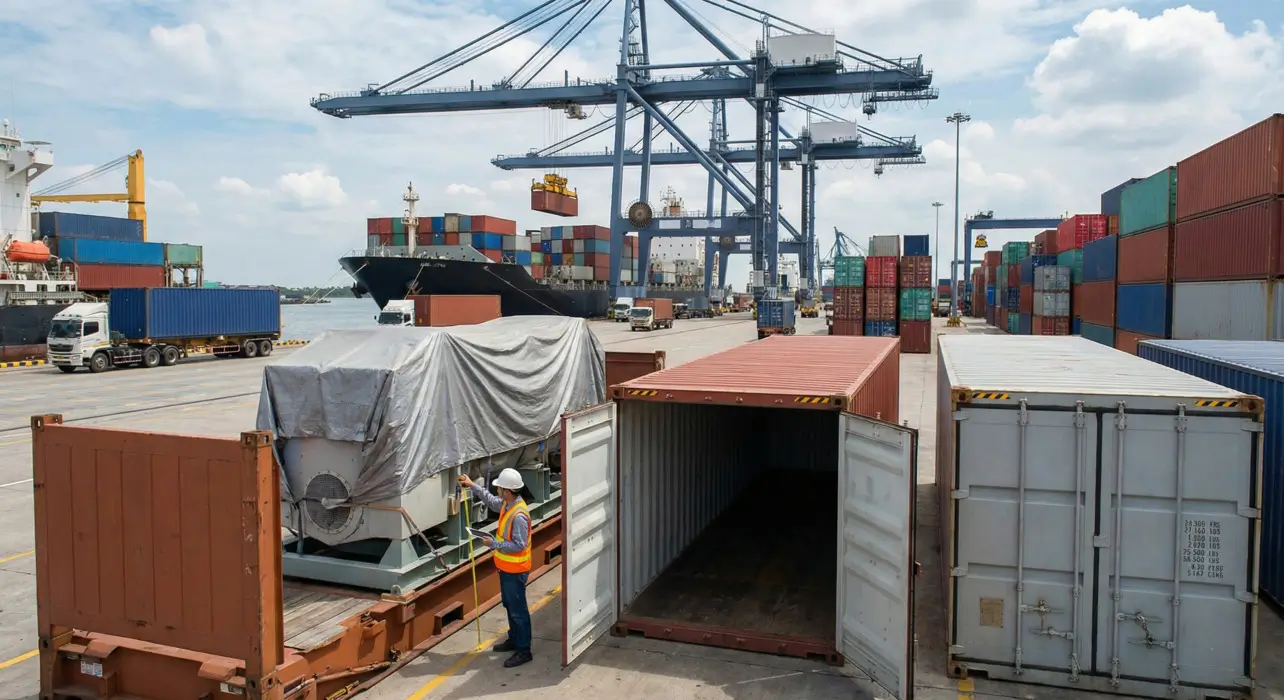
Choosing the right container types and sizes is the first step for a smooth and successful shipment. If you move heavy machinery, industrial parts, or general goods, the container you choose affects safety and total cost. A clear selection plan helps avoid delays and helps the cargo fit well without wasted space.
In this guide, we explain the most useful container options for project shipments and show how to match them to your cargo needs. And help you to choose faster and avoid last-minute changes during packing and dispatch.
Why Container Choice Matters?
The correct container keeps cargo steady during lifting, road transport, and sea movement. The wrong container can cause poor weight balance, difficult loading, and extra costs for rehandling or repacking. A clear container capacity plan also improves lashing, space use, and loading speed. It also helps teams confirm that cranes, forklifts, and trailers can handle the container and cargo safely.
Project cargo rarely stacks like cartons, so poor planning often leads to wasted space. A packing list and a simple loading sketch reduce this risk and support safer stuffing. These checks also help confirm if the shipment needs special handling rules for out-of-gauge cargo.
Container Types and Sizes For Project Cargo
Standard dry containers
Standard dry containers suit most boxed cargo, crated items, and many machines that can pass through the doors. The most common choices are 20-foot and 40-foot units. A 20-foot container holds about 33 cubic meters, while a 40-foot container holds about 67 cubic meters. Many standard units support a payload in the 20–30 ton range, but the exact limit depends on the container rating and carrier rules.
Choose this type when cargo must stay dry, fits within the internal frame, and can load through the doors without special lifting. This option is also easier to source because it is widely available in most ports and depots.
High cube containers
High cube containers give extra height for cargo that needs more vertical space. They are usually 9 feet 6 inches tall, while standard containers are usually 8 feet 6 inches tall. A 40-foot high cube unit holds about 76 cubic meters, which is more than a standard 40-foot unit at about 67 cubic meters.
Payload limits are often similar to a standard 40-foot container, so the main benefit is extra volume. Use a high cube unit for light but bulky cargo, such as tall crates and large components with lower density. This extra height can also improve loading safety when cargo needs clearance above the top layer.
Open-top containers
Open-top containers work best for cargo that is too tall for standard door loading or needs crane loading from above. These containers use a removable top area and a tarp cover after loading.
This setup supports tall machines, frames, and steel pieces that cannot fit through the door opening. Choose an open-top unit when a top lift is the safest loading method for your cargo. Confirm the cover plan and lashing plan because the top needs proper protection during the sea leg.
Flat rack containers
Flat rack containers provide a strong base and open sides, and many models have end walls that fold down. This design supports oversized cargo that is wide, tall, or long. Flat racks are available in 20-foot and 40-foot sizes and are common for heavy and irregular loads.
Use flat racks for vehicles, large machines, and structural parts that need side loading and strong securing points. This option usually requires a clear lashing plan, corner protection, and careful lift planning at both ends of the move.
Container Size Chart and Key Limits
A container size chart helps you compare internal volume, payload, and best-use cases in one place. The figures below describe common ISO container options used in global shipping, but small differences can occur by manufacturer and carrier. Always confirm final internal measurements, door opening size, and payload details on the exact unit you will use.
| Container option | Typical internal size (L×W×H) | Typical internal volume | Typical max payload | Best fit for |
| 20-foot standard | 20 ft × 8 ft × 8 ft 6 in | ~33 m³ | ~20–28 tons | Dense cargo, heavy parts, compact machines |
| 40-foot standard | 40 ft × 8 ft × 8 ft 6 in | ~67 m³ | ~28–30 tons | Mixed project cargo, long crates, higher volume loads |
| 40-foot high cube | 40 ft × 8 ft × 9 ft 6 in | ~76 m³ | ~28–30 tons | Bulky cargo that needs more height |
Two limits control container selection in most cases. The first limit is space, which includes internal length, width, height, and the door opening. The second limit is weight, which includes payload, road axle limits, and lifting limits at terminals.
How to Match Container Capacity To Cargo
Step 1: Measure cargo and calculate volume
Start with a packing list that includes length, width, height, and weight for every piece. Calculate volume for each piece by multiplying length × width × height, and then add the results to get total cargo volume. Compare this total against the container volume to check container capacity for the shipment.
Add a buffer because real loading always needs space for bracing, dunnage, and safe clearance. A simple approach is to keep 10–15% extra space so the cargo still fits during actual stuffing. This step prevents last-minute changes at the warehouse or container yard.
Step 2: Check weight and balance
Add up the weight of all cargo pieces and compare it to the allowed container payload. Keep the shipment below the limit to avoid safety issues and compliance problems. Place heavy items low and near the centerline so the container lifts and moves in a stable way.
Balance matters even when the total weight is within limits. Poor distribution can damage the container floor and can create handling issues during crane lifts. A basic loading sketch helps teams place heavy items first and secure them correctly.
Step 3: Choose the loading method
Use a standard unit when cargo can pass through the doors and can load with forklifts or pallet equipment. Use an open-top unit when cargo needs top loading because of height or safer crane access. Use a flat rack when cargo is out of gauge or needs side loading and special securing.
Check the loading site equipment before confirming the container type. The site needs enough space and the right lifting tools to handle the cargo safely. The site also needs correct lashing materials, such as chains, turnbuckles, edge protectors, and blocking.
One Container Capacity: Volume vs Payload
One container capacity can mean either volume or payload, so the meaning should be clear during planning. Volume refers to the cubic space inside the container. Payload refers to the maximum cargo weight the unit can carry safely.
A heavy machine may reach payload limits long before it fills the internal space. A light but bulky load may fill the container volume before it reaches payload limits. This is why the best selection depends on both measurements.
Final Checks and Common Mistakes
Use a short checklist before booking.
- Confirm cargo dimensions, piece count, and weights on one sheet.
- Confirm the container option matches loading access at the site and at the port.
- Confirm the lashing method and materials for sea movement, including anti-slip mats and bracing blocks.
- Confirm if the shipment needs special handling rules for out-of-gauge cargo on open-top or flat rack units.
- Confirm booking lead time, since special units can have lower availability than standard units.
Avoid these common mistakes.
- Teams overestimate usable space and forget that bracing and clearance take room.
- Teams underestimate weight and face last-minute changes after a weight check.
- Teams choose the cheapest unit even when the cargo needs top loading or open sides.
Conclusion
You can choose the right container by checking cargo dimensions, cargo weight, and the loading method at origin and destination. Standard containers suit many shipments, while high cube, open-top, and flat rack options support volume and oversize needs. A quick review of the container size chart and a simple load plan can reduce damage risk and reduce delays.
Ready to ship with confidence and avoid costly mistakes? If you want to hire professionals, you can trust Sea Trans Agencies for reliable service. Contact the team to get the right container plan, the right handling method, and smooth delivery from start to finish.