


Exporting goods requires clear cost planning and a correct shipping method. When shipping auto parts from India to Africa, the choice between FCL and LCL changes the total freight bill, delivery time, and handling steps. FCL means one shipper uses one full container, while LCL means many shippers share one container.
LCL often suits smaller loads through consolidation shipping, while FCL suits larger loads that can fill most of a container. In this guide, we explain the cost drivers and help you choose the right option for your shipment.
Understanding FCL and LCL Shipping Methods
What is FCL Shipping?
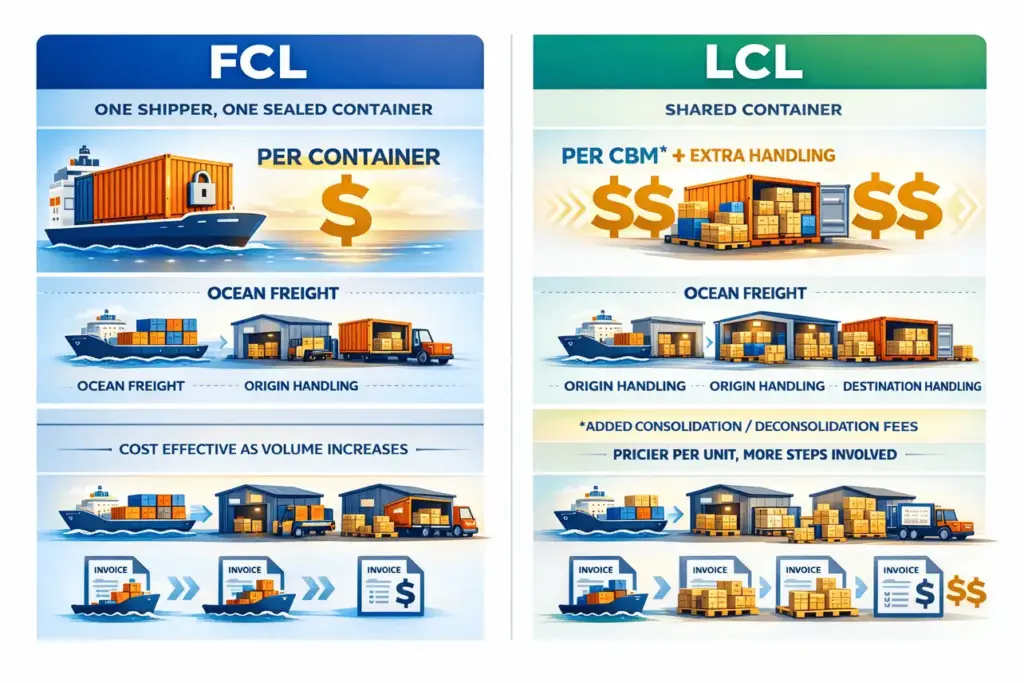
Full Container Load (FCL) means one exporter books a full container for its cargo. You pay mainly per container, not per cubic meter, so the cost per unit becomes lower as volume increases. FCL containers also reduce cargo mixing because the container usually holds only one shipper’s goods.
What is LCL Shipping?
Less than Container Load (LCL) means your cargo ships in a shared container with other shippers’ cargo. You pay mainly based on the shipment volume (CBM) or chargeable volume rules, plus handling charges. LCL includes consolidation at origin and deconsolidation at destination, which adds extra handling steps to the LCL Shipping Cost.
FCL Shipping Costs from India to Africa
Current FCL Pricing
The FCL Cost is quoted as a container rate (for example, 20-foot or 40-foot), plus origin and destination charges. Rates change by route, carrier, season, and port pair, so exporters should confirm live pricing for the exact Indian port and African port. If you manage auto parts export often, regular bookings can make planning easier because FCL pricing is usually simpler than shared-container pricing.
Factors Affecting FCL Rates
Several factors change your FCL Cost:
- Port Selection: The Indian port and African port you choose affects freight and local charges.
Container Type: Standard containers and high-cube containers have different pricing because capacity and demand differ.
Seasonal Demand: Rate levels change through the year, so booking timing affects the final freight bill.
Shipping Company: Carriers and service routes differ in schedules and cost structure, which affects your quote.
LCL Shipping Costs from India to Africa
Understanding LCL Pricing Structure
LCL Cost is usually based on CBM, plus charges for handling at origin and destination. Because LCL uses shared containers, the total bill often includes several line items beyond ocean freight. This structure helps smaller exporters ship without waiting to fill a full container, though it impacts the final LCL shipping cost.
Hidden Costs in LCL Shipping
LCL often includes extra charges that do not apply in the same way to FCL:
- Consolidation Fees: Cargo is received and processed at a container freight station (CFS) before loading into a shared container.
- Deconsolidation Fees: At destination, the CFS separates cargo for each consignee, which adds handling charges.
- Documentation Handling: LCL can involve more processing because many shipments share one container movement.
- Storage Charges: If cargo stays longer than the free period at the CFS, storage fees can increase the final LCL Shipping Cost.
FCL vs LCL Cost Comparison
Breaking Down Total Landed Costs
A cost comparison works best when you compare the full landed cost, not only the ocean freight line. For LCL, add ocean freight per CBM + origin CFS charges + destination CFS charges + documentation charges. For FCL, add container rate + origin port charges + destination port charges + local delivery if needed. Comparing FCL vs LCL correctly requires looking at the total invoice amount.
The Break-Even Point
Many exporters compare quotes at mid-volume shipments to see when FCL becomes cheaper per CBM than LCL. The break-even level depends on route pricing, cargo density, peak season pricing, and destination port charges. The best practice is to request both FCL and LCL quotes for the same shipment details and compare the total charges side by side.
Transit Time Comparison
FCL Transit Times
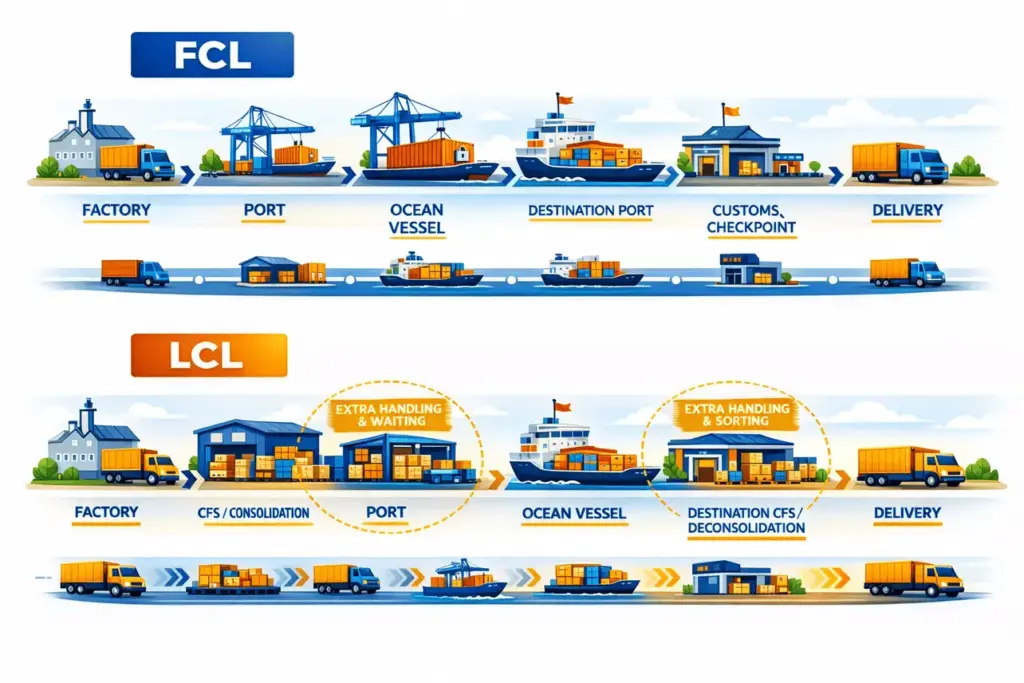
FCL often moves faster because it avoids warehouse waiting time for consolidation. FCL also has fewer handling steps because the container stays sealed from origin to destination in many shipments. Transit time still depends on sailing schedules, route stops, and the African port you choose.
LCL Transit Times
LCL can take longer because cargo may wait at origin until the consolidator completes the shared container load. At destination, LCL needs deconsolidation at the CFS before final pickup or delivery, which adds time. This time difference matters for urgent orders and fast-moving spare parts demand.
Consolidation Shipping and Auto Parts
How Consolidation Works
Consolidation shipping means a forwarder groups multiple small shipments into one container for the same destination. This process usually happens at a warehouse or CFS where cargo is received, sorted, and loaded into the shared container. For auto parts shipping, consolidation helps when shipments are frequent but each shipment is small in volume.
Industries Using Consolidation
Auto parts export shipments often fit consolidation because many parts ship in cartons, pallets, or small crates rather than full-container loads. Aftermarket parts and mixed SKUs also ship well in LCL because buyers may order many part numbers in smaller quantities. A fixed consolidation schedule can support regular replenishment for distributors in Africa.
Key Considerations for Auto Parts Shipping
Packaging and Documentation
Good packaging prevents damage during handling at warehouses, CFS locations, and ports. Clear paperwork supports smooth customs clearance and reduces delays that increase total cost. For auto parts shipping, correct item description and packing list accuracy also helps avoid clearance issues.
Customs Clearance Requirements
Each African country has its own import rules and checks, so requirements can change by destination. Using an experienced freight forwarder India partner helps because they coordinate documents, booking, and clearance support with destination agents. Budgeting for duties and taxes is important because these costs can be a major part of the landed cost for auto parts.importlicensing.
Quality and Safety Standards
Some markets require proof of compliance, testing, or labeling for certain automotive items. Before shipment, confirm what standards apply to the destination to avoid holds, penalties, or re-export risk. This step is important for safety-related parts and regulated product categories.
Choosing Between FCL and LCL
Select FCL When:
- You ship enough volume to use a large part of a container.
- You need fewer handling steps and more direct container control.
- You want simpler pricing with fewer shared-container fees.
- You ship to the same African port often and want stable planning.
Select LCL When:
- Your shipment is small and you do not want to pay for a full container.
- You need flexible shipment timing and smaller, more frequent dispatches.
- You accept extra handling steps in exchange for lower upfront cost.
- You rely on consolidation shipping schedules to move cargo regularly.
Cost-Saving Tips for Auto Parts Shipping
- Ship during less busy months when possible, because market rates can be lower.
- Combine regular small shipments through consolidation shipping if you cannot fill a container each time.
- Pack efficiently to reduce wasted space, because LCL shipping cost is billed by volume and FCL space still has value.
- Book early when possible, because late bookings can limit schedule choices and increase costs.
- Compare more than one carrier or freight forwarder India quote, because service routes and charges differ.
Conclusion
Shipping Auto Parts from India to Africa needs a clear choice between FCL and LCL based on shipment size, urgency, and total cost. FCL often suits larger volumes because pricing is per container and handling is lower. LCL suits smaller shipments because you pay by volume, but extra CFS steps can add cost and time. Use a quote comparison to find your break-even point for each route.
Ready for world-class service? Partner with Sea Trans Agencies today. We are the biggest logistic company in India and worldwide, and the biggest cargo forwarder across any port of the world. Trust your global shipments to the industry leader.