
Transporting massive industrial equipment involves significant financial risk and logistical precision. A single accident during transit can cause millions of dollars in damage and halt critical project timelines. Project managers often overlook the financial safety net required for these movements until a disaster strikes.
Cargo insurance provides essential protection against physical loss or damage while your goods are in transit. This article explains why specialized coverage is non-negotiable for heavy machinery and how it secures your business assets.
Understanding the Basics: What Is Cargo Insurance?
Many business owners assume their logistics provider automatically covers the full value of their shipment. This assumption is dangerous and often incorrect. To protect your bottom line, you must understand what is cargo insurance and how it functions distinctively from carrier liability.
Liability Versus True Coverage
This type of insurance is a policy that indemnifies the cargo owner against financial losses. If your machinery suffers damage, theft, or loss due to covered perils, the insurer reimburses the declared value of the goods. For standard shipments, this might seem optional.
However, for high-value industrial assets, it is a fundamental requirement. Without a dedicated policy, you rely solely on the carrier’s limited liability terms, which rarely cover the replacement cost of heavy equipment.
The Certainty of Reimbursement
Shippers often confuse the carrier’s responsibility with actual insurance coverage. A carrier might only be liable if you can prove their negligence caused the damage. Even then, international conventions often cap their payout based on weight rather than value.
A specific insurance policy removes the burden of proving negligence. It ensures you receive compensation based on the actual value of your machinery regardless of who was at fault for the incident.
The Unique Risks of ODC Transportation
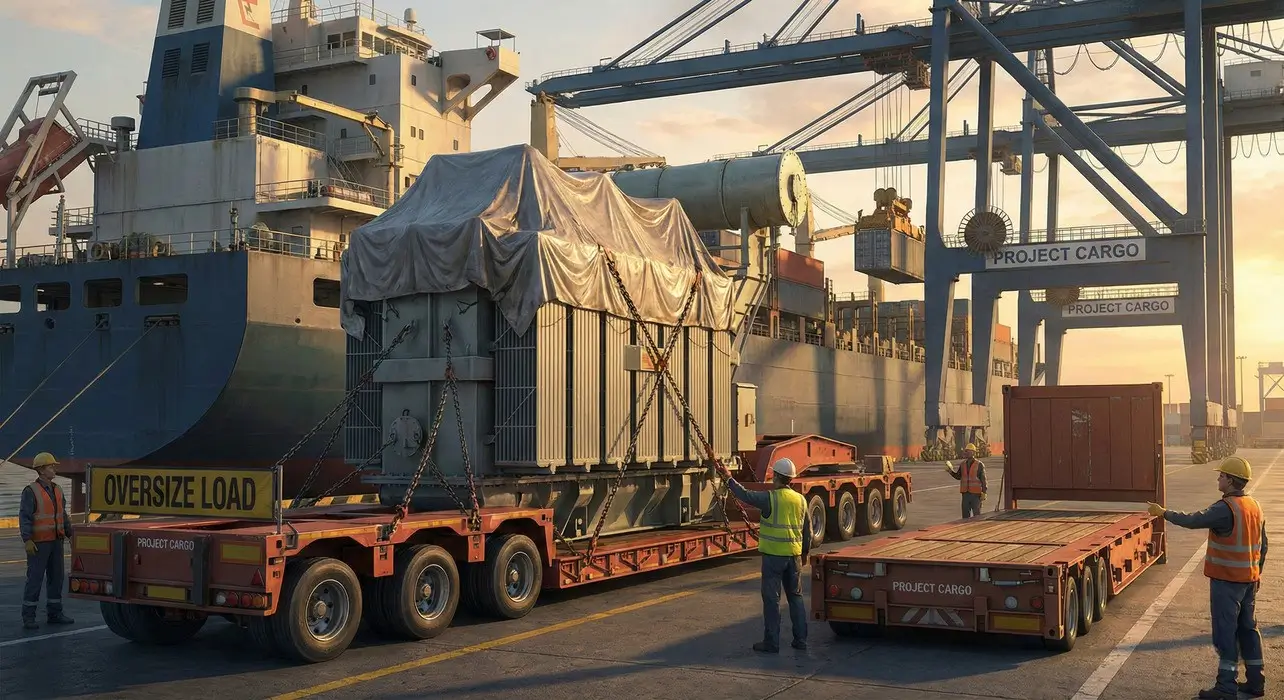
ODC Transportation involves moving freight that exceeds standard container limits in length, width, height, or weight. Moving these oversized items presents hazards that standard shipping crates never face.
Stability and Center of Gravity Issues
Standard pallets fit well in rectangular containers. In contrast, heavy machinery often has an irregular shape and a high center of gravity. The shifting or sliding of the cargo during the ocean voyage or road transport is possible. A 50-ton transformer can get destabilised due to sudden braking on any highway or rough seas.
If the lashing doesn’t work, the equipment could be badly damaged. Standard liability terms often exclude damage resulting from insufficient packing if the shipper secured the load. This leaves you exposed without proper coverage.
Infrastructure Constraints
Routes for ODC Transportation require detailed planning because bridges, tunnels, and power lines pose physical threats. Despite careful route surveys, accidents occur. A trailer might clip a low-hanging bridge or a road shoulder might collapse under extreme weight.
These incidents can ruin the cargo instantly. Specialized insurance policies account for these transit-specific hazards. They cover the machinery against collision, overturning, and derailment.
Handling and Transshipment Dangers
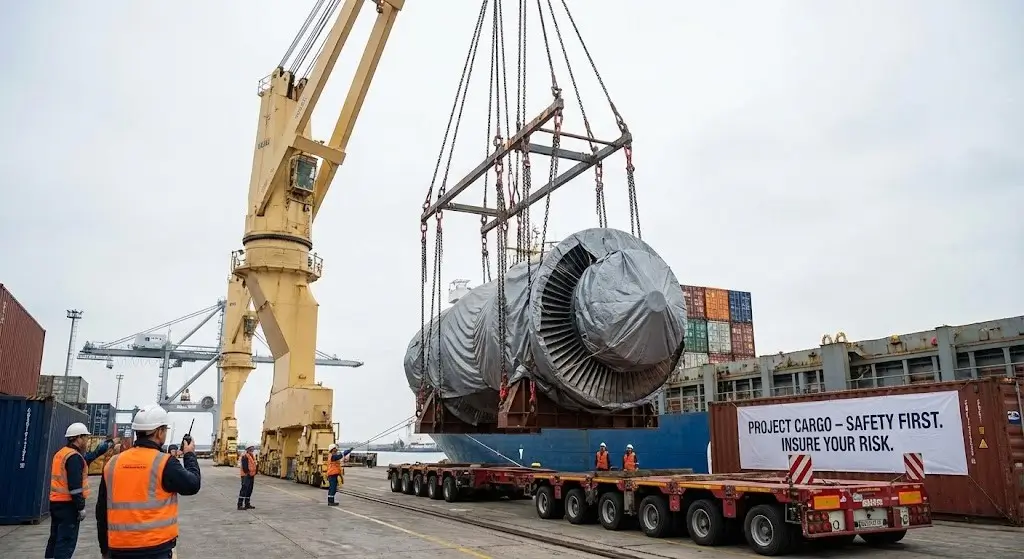
Heavy machinery rarely travels directly from point A to point B without stops. It requires cranes for loading, transfers between vessels, and offloading onto trailers. Each lifting point increases the risk of dropped cargo or impact damage.
Crane failures or rigging errors can drop a multi-million dollar turbine. Comprehensive coverage protects the asset during these vulnerable transition points. This ensures that a handling error does not bankrupt a project.
Analyzing the Cargo Insurance Meaning for Heavy Haulage
To make informed decisions, shippers must grasp the full cargo insurance meaning within the context of heavy haulage. It signifies the transfer of financial risk from the equipment owner to an underwriting company.
The Risk Transfer Concept
In the context of heavy machinery, this meaning extends beyond simple theft or breakage. It encompasses General Average. This is a maritime principle that surprises many exporters. If a ship captain must sacrifice part of the cargo or incur extraordinary expenses to save the vessel during a storm, all cargo owners on board must share the cost.
This contribution can be substantial. A proper insurance policy covers your general average contribution. Without it, the carrier can hold your machinery hostage until you pay your share of the ship’s losses. This applies even if your specific cargo remains undamaged.
Clause Types and Specifics
The meaning of coverage varies based on the clauses selected. Institute Cargo Clauses A, B, and C offer different levels of protection. When it comes to shipping heavy machinery, shippers will generally take the insurance which provides All-Risk protection under Clause A.
This gives protection for all risks of loss/destruction except one specifically excluded. When you know the differences, you don’t buy a policy excluding the very risks your project faces. These are rust, oxidization, or scratches because of an open-deck transport.
Limitations of Relying on Carrier Liability
New exporters often ask why they should pay extra if the carrier is responsible. The answer lies in the limitations of liability. International laws such as the Hague-Visby Rules or the CMR Convention limit carrier liability significantly.
Understanding Financial Caps
For ocean freight, a carrier’s liability might be limited to a small amount per package or kilogram. A generator weighing 20,000 kilograms might be valued at $500,000. However, the carrier’s liability payout could be capped at a fraction of that amount.
This is often around $40,000 to $60,000 depending on the specific convention applied. This gap between the payout and the replacement cost is the financial exposure your business absorbs.
Common Carrier Exclusions
Carriers list numerous exclusions in their terms and conditions. They are often not liable for Acts of God such as lightning strikes, hurricanes, or rogue waves. If a storm washes your machinery overboard, the carrier pays nothing.
Cargo insurance fills this gap. It pays out for weather-related events and non-negligence claims. This ensures your capital investment remains safe even when nature strikes.
Key Coverage Elements for Heavy Machinery
When insuring ODC, you must ensure the policy addresses the specific characteristics of your freight.
Debris Removal Clauses
If an accident occurs and your machinery scatters across a highway, local authorities will charge you for the cleanup. These costs are immense and A standard policy might not cover debris removal. For heavy equipment, ensure your underwriter includes a clause for the cost of removing the damaged goods and clearing the accident site.
Loading and Unloading Extension
Most damage to heavy machinery happens during the lifting phase. Standard transit clauses might only cover the cargo while it is actively moving. You need an extension that explicitly covers the risk during loading at the origin and unloading at the final destination. This continuous coverage is vital for projects where the shipper manages the crane operations.
Consequential Loss Protection
Standard freight policies cover the value of the goods rather than the profit you lose because the goods did not arrive. If a damaged machine delays a factory opening by three months, the financial loss exceeds the machine’s cost.
While standard policies exclude this, shippers can negotiate specific coverage for Delay in Start-Up for large projects. This advanced form of protection is worth considering for time-sensitive ODC Transportation projects.
How to File a Claim for Heavy Equipment Damage
Knowing what is cargo insurance also means knowing how to use it. If your machinery arrives damaged, immediate action is necessary to secure your claim.
Steps for Immediate Action
- Inspect Immediately: Never sign a delivery receipt without inspecting the machinery. Note any visible damage on the driver’s paperwork. If you sign stating you received it in good order, you weaken your claim.
- Take Photographs: Document the damage from multiple angles. Include photos of the packaging, the lashing materials, and the position of the cargo on the trailer.
- Notify the Insurer: Contact your insurance provider immediately. Most policies have strict time limits for notification.
- Mitigate Further Loss: You have a duty to prevent the damage from getting worse. Cover exposed machinery with tarps to protect it from rain while waiting for a surveyor.
- Retain Evidence: Do not discard damaged parts or packaging until the insurance surveyor approves. These items are evidence of the cause of loss.
Selecting the Right Partner for the Job
Securing the right policy requires expertise. Generic insurance providers may not understand the nuances of flat racks, open-top containers, or break-bulk shipping.
Expertise in Open Deck Shipping
Providers might sell you a policy that excludes on-deck shipments. Yet most heavy movements occur on the deck of a ship. Working with a logistics partner who understands both the physical movement and the financial protection of heavy cargo is essential. They can advise on the correct declared value. This ensures you include freight costs, duties, and an additional percentage for administrative overhead.
Valuation and Average Clauses
This attention to detail ensures that if a total loss occurs, you recover the full landed cost of the item. You avoid getting only the factory invoice price. Correctly valuing your shipment prevents average clauses where an insurer reduces the payout because you under-insured the asset.
For example, if you insure a machine for 50% of its value, the insurer will only pay 50% of the claim. This applies even for partial damage. A knowledgeable partner helps you avoid these valuation traps.
Conclusion
Transporting heavy machinery requires more than just heavy-duty trucks and cranes; it requires strong financial planning. The risks associated with ODC Transportation are too great to ignore. Such issues include problems with stability and infrastructure hazards.
Understanding the difference between full cargo insurance and the basic carrier liability will help you make wise decisions after that. With a comprehensive policy in place, your finances are protected and your project is on track. Moreover, it protects you against expensive risks that carrier liability does not.
Do not leave your high-value assets exposed to chance on the open road or high seas. Protect your high-value cargo with experts who understand the stakes. Contact Sea Trans Agencies today for comprehensive ODC transportation and insurance guidance.