

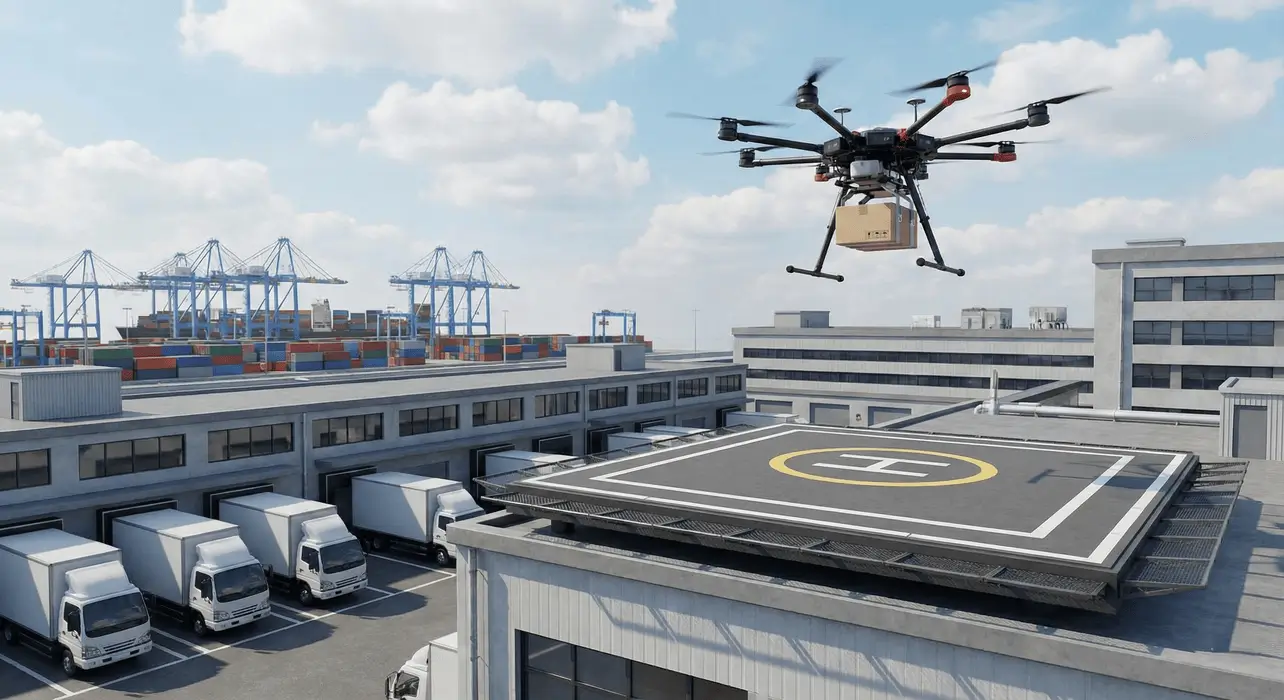
Drone deliveries now move from testing to real customer service in many regions. A drone can carry a small package from a local hub to a delivery point in minutes. This helps when roads cause delays or when a customer needs an urgent item. Many global logistics teams study drones because last-mile delivery costs stay high and customer expectations keep rising.
Drones do not replace trucks in most cases. Drones support trucks by handling specific routes, specific items, and specific time windows. This makes drone delivery a practical option in selected areas today.
What drone delivery solves
Drones target clear last-mile problems that trucks struggle to fix quickly. A good drone program starts with a clear problem and a clear service goal.
Faster delivery for urgent items
A drone can avoid traffic jams and reach a nearby address on a direct path. This can improve delivery speed for medicines, spare parts, and important documents. This also helps hospitals, clinics, and field teams that depend on fast supply support.
Better access to hard locations
Some delivery points are slow to reach by road. Islands, rural zones, and areas with poor road quality can cause long travel times. A drone can reduce delays when roads are limited or damaged.
Lower pressure on city fleets
Delivery vans often stop many times in dense areas. This adds congestion and creates parking issues. Drones can reduce the number of van stops for small parcels in approved zones. This can improve route flow for the remaining van deliveries.
Drone delivery logistics in real operations
Drone delivery logistics follows a defined workflow that keeps safety, tracking, and proof of delivery under control. The process must support repeatable operations, not one-time flights.
Typical delivery steps
Most programs use a step-by-step flow that reduces mistakes.
- A dispatcher confirms the order size, weight, and delivery location.
- A worker packs the item in a secure container with a label and tracking ID.
- The team loads the package into the drone payload bay or tether system.
- The system runs pre-flight checks on battery, sensors, and route limits.
- The drone flies to a drop zone or lowers the package to a safe point.
- The system records delivery time and delivery confirmation.
This workflow matters because it supports reliability and customer trust.
What drones can carry today
Most delivery drones carry light payloads, often a few kilograms. This makes them suitable for small parcels and high-value items. Heavy parcels, large boxes, and fragile items still fit better with vans and trucks. Range also depends on payload, wind, and battery health. Short routes close to a distribution point often produce the best results.
How service teams control risk
Operators use clear operating rules to reduce risk.
- They set approved drop zones to avoid unsafe landing areas.
- They use geofencing to stop entry into restricted airspace.
- They schedule flights in safer time periods when possible.
- They define weather limits for wind, rain, and visibility.
- They keep human oversight for exception handling.
These controls make the service stable and easier to scale.
Autonomous delivery technology and route safety
Autonomous delivery technology allows drones to fly with limited human control during normal operations. This does not remove safety oversight. It reduces manual workload and improves flight consistency.
Sensors and guidance systems
A delivery drone uses GPS, cameras, and onboard sensors to keep position, detect obstacles, and hold safe altitude. It can follow a planned route and adjust small movements for stability. A well-designed system also monitors motor health and battery status during the flight.
Route planning and live adjustments
The drone system must choose a safe path and keep the path inside allowed zones. It must also adjust when conditions change. For example, the system can reroute around a temporary hazard or pause a flight if weather crosses a safe limit. These features matter because drones operate in open environments with changing conditions.
Fleet control and scheduling
A company cannot scale drones without fleet planning. Fleet software assigns flights based on distance, battery level, payload limits, and available landing slots. It also keeps flight logs for audits and service reporting. This supports safer operations and better customer service.
Where last-mile delivery drones fit best
Last-mile delivery drones work best when the delivery need matches the drone’s limits. A company should choose routes that produce clear time savings or clear access benefits.
Strong use cases
These use cases often show the best early results.
- Medical deliveries between a hub and clinics that need quick restock.
- E-commerce parcels for suburban homes close to a local fulfillment site.
- Spare parts for maintenance teams that need fast repair support.
- Remote community deliveries where vans take too long per stop.
These cases work because they focus on speed, access, and repeatable routes.
Weak use cases
Some routes create low value for drones.
- Dense city blocks with tall buildings and limited drop zones.
- Areas with strict flight limits that reduce route options.
- Heavy parcel deliveries that exceed payload limits.
- Regions with frequent strong wind or heavy rain.
These cases often produce high cost per delivery and lower service reliability.
Supply chain automation and hybrid delivery models
Supply chain automation improves when drones connect with warehouse systems, route planning tools, and customer tracking. The goal is smooth flow from order to dispatch to proof of delivery.
Drone plus van delivery
A hybrid model can improve productivity. A van can act as a mobile base, stop at a safe staging point, and launch drones for nearby stops. This reduces van drive time and reduces parking issues. It also helps drivers focus on larger drops while drones handle small parcels.
Warehouse process changes
Automation also affects the warehouse. Teams can create fast pick-and-pack lanes for drone-ready items. They can also use priority rules for urgent deliveries. This shortens order handling time and improves same-day delivery performance.
Better visibility for customers
Tracking improves when systems connect. The customer can receive clear updates on dispatch time and arrival time. Proof of delivery can include time stamps and location records. This reduces disputes and supports service quality.
Logistics innovation trends shaping adoption
Logistics innovation trends show steady movement toward more automation, more visibility, and faster last-mile service. Drones fit into this shift when the business case is clear.
Falling hardware and software costs
Competition and higher production volumes can reduce unit costs over time. Better software also reduces manual work per delivery. Lower cost helps more companies test drones without large budgets.
Better batteries and charging workflows
Battery improvements can increase range and lift capacity. Fast charging and battery swap systems can reduce downtime. These changes can raise daily delivery volume per drone.
More standard operating rules
As programs expand, operating playbooks become clearer. Companies build better training, maintenance schedules, and safety checklists. Clear rules make performance more consistent across regions.
Rules, safety, and practical barriers
Drones face limits that slow mass adoption. A realistic plan includes these limits from day one.
Regulations and permissions
A drone program needs approval in many locations. Aviation rules often define where drones can fly and how operators must monitor flights. Rules can also limit flights near airports, crowded zones, and sensitive sites. Companies must treat compliance as a core part of operations, not an afterthought.
Safety and liability
Safety planning must cover equipment failure, loss of signal, and package drop risks. Companies also need clear liability coverage. This includes insurance planning and incident reporting processes. These steps protect the public and protect the business.
Weather and service reliability
Weather affects drones more than vans. Wind can reduce stability and battery life. Rain can affect sensors and electronics. A drone program needs clear weather thresholds and a backup method, such as van delivery, when drones cannot fly.
Unit economics and scale
Drones require upfront investment, skilled operators, and ongoing maintenance. They often make sense first for urgent, high-value, or remote deliveries. The cost per delivery can drop when volume increases, routes repeat, and downtime stays low.
Future of global logistics with drone delivery
The Future of global logistics will likely include drones, but drones will serve defined roles. Trucks, vans, lockers, and pickup points will still handle most parcel volume in many regions. Drones will grow where they improve speed, access, and service reliability for the right shipment types.
Companies will also improve how drones connect with other tools. Fleet platforms will link dispatch planning, inventory data, and customer tracking. This will help teams run mixed fleets with fewer delays and fewer manual tasks. The best results will come from clear route selection, clear safety rules, and measured expansion.
Conclusion
Drone deliveries already work in real settings, but they fit best in selected routes and selected product types. Last-mile delivery drones can reduce delivery time for urgent items and improve access in remote areas. Regulations, weather limits, and cost controls still shape how fast adoption grows. Companies that start with pilots, clear safety rules, and strong tracking can learn faster and scale with less risk. If you want to hire professionals, you can trust Sea Trans Agencies for reliable service.