
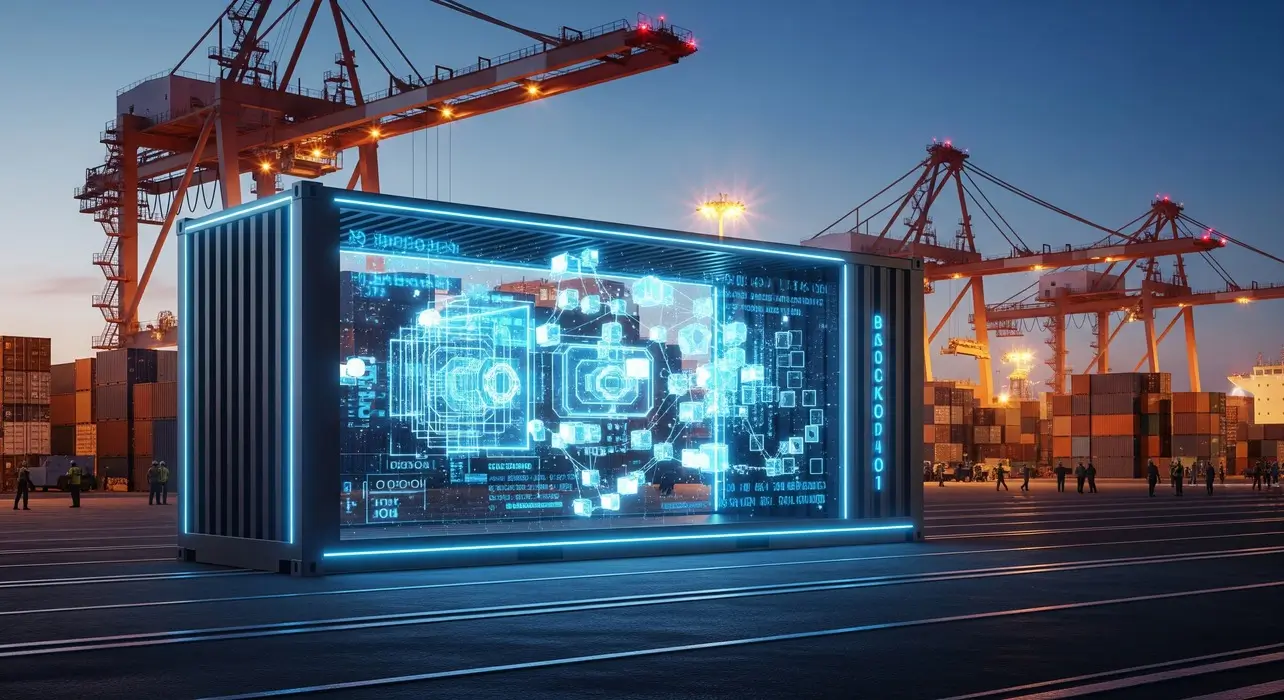
The movement of goods throughout the world is shifting with blockchain technology. It establishes irreversible documents that all can rely on and check. It is a kind of innovation that enables the worldwide logistic company to monitor the shipments with utmost transparency and precision.
As compared to the old systems, blockchain eliminates the middleman and minimizes documentation. Faster processing, reduced costs, and enhanced security are provided to companies that utilize blockchain. This has been changing the way the business is carried out in the industry, and giving some real value to the business all over the world.
Understanding Blockchain Technology in Logistics
Blockchain is an electronic registry, where data are stored in blocks. The blocks are connected in a sequence of one to the other. When the data is deposited in the blockchain, it is permanently stored and cannot be modified or removed. This is because blockchain is a permanent record, which makes it ideal in monitoring goods and administrative documents.
What is Blockchain?
Blockchain is decentralized in data storage. Other people are the ones who have the copy of the same record as opposed to just one company having all the information. Whenever one transacts something, the whole network should confirm it before attaching to the chain. This is a checking mechanism that is used to eliminate fraud. The technology offers one source of truth that everyone is able to access and rely on.
Why Blockchain Matters for Freight
The conventional freight documentation is a complicated process. The papers are exchanged between suppliers, carriers, brokers, and customers. Data is entered manually in copies and each party makes copies. It is laborious, costly and errors are likely to occur. Blockchain eradicates all of these inefficiencies as it generates a single digital record which is visible to all real-time.
How Blockchain Improves Freight Tracking
Goods tracking is one of the most essential activities of a shipping company. This is accomplished by blockchain, and it is more reliable and less time-consuming. Real-time visibility assists in creating better decisions by all parties.
Live Tracking of Deliveries
Blockchain logs all the transactions of a shipment on an immutable register. As soon as a container is out of a warehouse, it is registered by the network. Upon arrival at a port, the system records that.
This develops a full history that the customers can see immediately. Contrasting with the conventional systems that are updated once or twice a day, blockchain updates information in real-time. Such real-time visibility will enable the customers to locate their goods at any given time.
Eliminating Paperwork and Manual Entry
Freight documents include invoices, bills of lading, certificates and custom forms. It takes days or weeks to transfer these documents among the parties. Blockchain enables all the necessary documents to be in electronic form on a joint register.
A bill of lading can be uploaded once by a shipping agent and the same document is available to all parties instantly. This helps to eradicate manual data input and eradicates errors. When data are inputted once and exchanged electronically, errors are removed since all of them utilize the same information source.
Blockchain and Documentation in Global Logistics
When operating international shipments, it would be required to deal with various countries and regulations. The process of documentation is complicated and time-consuming. This process is made very easy by blockchain.
Automating Customs Clearance
One of the largest bottlenecks in international trade is customs clearance. The authorities require evidence of provenance, product descriptions, values and certifications. All such information is stored in digital form and is not subject to modification with blockchain.
The customs officials will be able to check the documents without having to wait till they receive a copy of the paperwork in the mail or through a courier. This reduces the approval time taken by days to hours. Increased speed of clearance implies that goods are delivered to the destination faster and that benefits all the members of the supply chain.
Creating Immutable Records
Immutable refers to something that cannot be changed. After being written in the blockchain, a record is immutable and can never be tampered with by anyone. Blockchain is ideal in legal documents due to this. In case a conflict appears with the date of delivery or condition of the products, the blockchain record will be used to prove this fact. No party can say that the goods were delivered in a different date or that it was in different quantities. This provides a legal history that is recognized by the world courts and regulators. Firms minimise chances of being cheated and conflict arising when they engage blockchain records.
Shipping and Freight Forwarding Benefits
Freight forwarding companies deal with complicated cross-border and carrier shipments. These operations have certain benefits provided by blockchain.
Cost Reduction by Automation
The freight forwarding that has been traditional has a lot of manual work. Employees record information in various systems. Paper work is printed, signed and scanned. Every step is time and money consuming. These processes are automated by blockchain. Smart contracts are set to run automatically and in accordance with specific conditions.
To illustrate, a smart contract is able to release payment to a carrier as soon as the system has confirmed delivery. It is an automation that lowers the costs of labor and accelerates transactions. When companies move to blockchain systems, they report a reduction in costs of between 5-10 percent.
Building A More Trustful Partnership
Freight forwarding needs some trust among shippers, carriers, customs brokers and financial institutions. Misunderstandings among several parties are a common occurrence when several parties collaborate. Transparency is formed through blockchain and it generates trust.
All the parties view the same information hence there are few disputes. In case of disagreement, the blockchain record could be used as evidence. This transparency promotes collaborations and simplifies the process of negotiation. Rapid relationships are built whenever all the parties are aware of the fact that they can trust the data.
Blockchain and Insurance in Shipping
Shipping requires insurance since the goods are prone to numerous risks. Blockchain is transforming insurance claims.
Faster Claims Processing
In cases whereby goods are damaged or lost, the shipping company should also claim insurance. This is now carried out by gathering documents, photographs and witness testimonies. Claims take weeks or months to be processed.
By using blockchain, the carrier uploads documentation on the issue as soon as the issue is detected. The insurance company goes through the same confirmed information. Smart contracts are able to automatically initiate payment when both parties concur on the level of damages. Cases which used to take months, are settled in days.
Preventing Insurance Fraud
The industry is costing billions of dollars every year due to insurance fraud. Fraudsters will make false claims or change documents to receive payouts. This fraud is prevented using blockchain since records are not changing. Should a carrier allege that a container was damaged during transit, the blockchain will give the actual state at every stop.
In the case when a person attempts to file a false claim, the records demonstrate that the claim is incorrect. The use of blockchain is becoming accepted as evidence by insurance companies since it is invulnerable and trustworthy.
Global Logistics Services and Supply Chain Transparency
The world of global logistics is associated with numerous transactions between countries and time zones. Blockchain offers a transparency layer, which crosses borders.
Developing Supply Chain Visibility
The same product may go through five countries before it reaches a customer in Europe. Every country has its regulations and documentation requirements. Blockchain enables the shipper to know the product step by step.
The handoff is captured permanently when a container is transported on a different carrier. In case of delay, the system will indicate the point and the reason. This total visibility assists the logistics managers in detecting the issues before it turns into a major problem.
Enabling Compliance Tracking
There are stringent regulations of international trade. The products have to comply with the safety standards, environmental regulations, and labor regulations. Firms must demonstrate conformity in order to evade fines. Certifications and inspections are logged into the blockchain when they occur.
Temperature logs of a food delivery can be stored in the blockchain, and it will verify that it was kept at appropriate temperatures. A textile manufacturer will be able to document that employees were paid well and provided with decent workplace conditions. These are records that can be instantly audited by the regulators.
Implementing Blockchain in Your Logistics Company
The use of blockchain needs planning and investment. Nevertheless, the advantages would be more than the expense to the majority of organizations.
Beginning with Pilot Projects
Businesses are not supposed to immediately go all the way to blockchain. Rather, they are advised to begin with a pilot project in one direction or one type of product. This will enable the staff to be trained on the system without interfering with the existing operations.
Pilot project brings out challenges before they can influence customer service. When the system has been functioning well, the company can spread to other regions. This step by step method cuts down risks and expenses.
Selecting The Appropriate Technology Partner
The use of blockchain entails the use of technical skills. The majority of companies collaborate with the technology providers that develop blockchain solutions to logistics. The partner of the right knows the functioning of logistics and blockchain.
They assist in the selection of what data should be put in the blockchain and what systems should be incorporated. They also offer training so that they can be familiar with the new system. Another important factor to achieve success is the choice of an experienced partner.
Challenges and Solutions
There are certain barriers to blockchain. Knowledge of these struggles would assist companies in planning on how to handle them.
Standardization Issues
At the present, various blockchain platforms have different standards. A shipping firm that has adopted a single blockchain system may not be able to interact with a company that has adopted another one.
The industry bodies are striving to establish standard formats, which can be shared by all platforms. Integration also becomes simpler as standards are created. Business organizations are supposed to keep track of such trends and implement systems that embrace new standards.
Initial Implementation Costs
The installation of blockchain systems involves the cost of investing in technology and training. This is an expensive cost to small firms. Nevertheless, industry consortiums are emerging in which several companies share one blockchain platform. This common practice saves money on the part of every member. With the increased usage of technology, the costs will be even lower.
The Future of Blockchain in Shipping
The technology of blockchain is developing. The industry is undergoing new applications that will transform it further.
Integration with IoT Sensors
The IoT devices monitor the temperature, location, and condition of goods. The integration of IoT sensors and blockchain development can generate effective tracking. The sensor transmits information to the blockchain on a real time basis.
This information cannot be changed and it can be used as evidence of the way goods were managed. This data can be fully trusted by insurance companies and custom authorities. Such a combination will be commonplace in the next few years.
Expansion of Smart Contracts
Smart contracts are written code-based agreements. They spontaneously implement when circumstances are followed. With the increasingly advanced development of smart contracts, the latter will process more complicated logistics practices.
A smart contract can automatically modify the shipping routes in accordance with the weather conditions. Another could disbursal funds to carriers after delivery confirmation and verification only. Such automated agreements will minimize delays and conflicts to a large extent.
Conclusion
The nature of freight tracking and documentation is changing drastically as a result of blockchain. It eliminates paperwork, saves on costs and enhances transparency. Firms that embrace this technology achieve competitive factors of speed and reliability.
The freight transport sector is making the transition to blockchain-based infrastructure as the standards are set and the costs are reduced. Those organizations who start preparing now will be able to be at the forefront in this new era. Change is not only occurring at a fast pace but there are benefits of early adoption.
Are you willing to modernize your operations? In case you need to employ professionals, you can rely on the services of Sea Trans Agencies to provide you with credible services that are not out of the technological innovations of the latest logistics services.